Living in Doha, Qatar: an expat guide
What to expect when moving to Doha
Qatar, lesser known than some of its Middle Eastern neighbours, has remained immune from much of the region’s economic and political turmoil. Although geographically small, Qatar’s petrochemical reserves are vast in relation to its land mass and have brought the country great financial wealth.
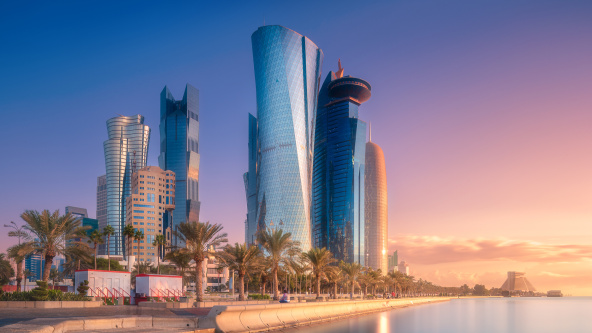
More recently the tiny, relatively young country has drawn worldwide attention for its willingness to spend its fortunes to improve the lives of its people and to build educational and cultural institutions, although there was controversy surrounding the hosting of the 2022 FIFA World Cup. The great majority of Qatar’s population (and an even higher percentage of its activities) are found in and immediately around Doha, where bedouin tents and camels have been replaced by construction cranes, architecturally unique skyscrapers, shopping malls, fast-food restaurants, and some very high priced automobiles. Usually, understandable English is spoken just about everywhere.
The desert
Just drive 45 minutes out of Doha and into the desert if you want to see a more primitive Qatar. On the way, you’ll undoubtedly have to stop for a pack of camels crossing the highway. In the desert, it is not unusual to see wild camels that you can approach (slowly) and pet or even for a bedouin to ride up and offer the opportunity to sit up on his camel (great photo ops for impressing the neighbours).
Culture shock
Although Qatar is quite westernised for a Middle Eastern country, expect some initial culture shock and regular frustrations that will cause you to shake your head to the point of whiplash. Know that none of the aggravations or inconveniences are insurmountable with more than a little patience and a glass or two of wine (which you can get, but more on that later).
Once you are assimilated, you will soon become immune to the drab, tan landscape, you’ll no longer notice the call to prayer broadcast over the mosques’ loudspeakers five times a day, and your daily routine may seem very similar to life in any European or American city.
Inshallah
You will hear this phrase a lot. Technically, it means ‘God willing’ or 'only by God’s grace will something happen'. For example, ‘I will see you tomorrow, inshallah’, implying that only God knows if the speaker will be alive another day. More often than not, however, ‘inshallah’ is used as a built-in excuse for someone who has absolutely no intention of doing what you are asking them to do, then claiming it is out of their hands and up to a higher power. It’s also used when someone can’t give a concrete answer. So, if you ask when your delivery will arrive, the answer will probably be, ‘Tomorrow, inshallah’ because the person won’t want to disappoint and so will tell you what you want to hear. It can be frustrating, but it’s something you will learn to accept as an intrinsic part of life in any Middle Eastern country.
Islamic culture and traditions
Modernised and progressive in many ways, Qatar is still a very traditional Muslim country. Locals are friendly and helpful, but they do expect expats to respect cultural and religious norms and dress and act conservatively out in public.
The Islamic culture and calendar dictate daily life. Pork products are prohibited, and alcohol consumption has strict restrictions. The work/school week runs from Sunday through Thursday which is one of the hardest adjustments to make. Do not be surprised if the children get a few tardies on their records because you forgot to take them to school on a Sunday until mid-morning. On Friday, the Islamic holy day, most stores and businesses will be closed until late afternoon or evening. The Christian churches in Doha also hold their services on Friday.
Modernised and progressive in many ways, Qatar is still a very traditional Muslim country. Locals are friendly and helpful, but they do expect expats to respect cultural and religious norms and dress and act conservatively out in public.
Dressing appropriately
Typical to the gulf region, most local Qatari men wear the traditional white thobes or thawbs, also known as dishdashah (though you will see some dark-coloured ones in the winter) and headdress of white or red/white checked headcloth (ghutrah or shemagh) and igal (black rope). Most Qatari women wear black abayas which can be plain or decorated quite elaborately with Swarovski crystals, beads, or embroidery, and they cover their heads with a hijab (scarf) or full or partial veil covering their face.
Western women do not have to cover their heads and faces, but exposed shoulders, knees, or cleavage are discouraged.
Calendar and holy times
The Islamic holy month of Ramadan brings additional restrictions and limitations and requires increased cultural awareness. The dates of Ramadan change annually, usually moving 11 days earlier than the previous year, but the actual dates are dictated by, and not officially declared until, a certain point in the lunar cycle.
Daily routine will be affected, but Ramadan also offers opportunities to experience the literal and figurative cultural flavour of the region. During this time, Muslims fast from sunrise to sunset. Out of respect, most non-Muslims refrain from eating and drinking in public during these hours also.
Avoiding public consumption is fairly easy since many restaurants remain closed during the day. Offices, stores, and other businesses often have reduced daytime hours to allow fasting employees to rest, then reopen late into the evening. Remember to check business hours before heading out, but even if you do, do not be surprised if they have changed by the time you get there.
In Doha, at sunset, a cannon is fired off downtown, and people head out into the streets to go eat or to do their errands. Restaurants generally offer iftar (the fast-breaking meal after sunset) or suhoor (the meal eaten very late at night/early morning before dawn before fasting begins) buffets rather than a la carte menus, and some of the big hotels will also have festive meals complete with entertainment like music, whirling dervishes, and henna artists. It’s worth experiencing one but ask for recommendations because they can be pricey.
Weather and climate
Arrive in Doha between April and October and the first thing you will notice as you step off the plane is the heat. Unless you have previously lived in the Middle East (or an oven), not much can prepare you for Qatar’s sweltering temperatures. Thermometers can rise to 50 degrees Celsius in summer months, making most outdoor activities unthinkable. Some days, even emerging outside from the comfort of an air-conditioned building or car is like having a wave of energy-sapping heat and humidity crash down on you. Your glasses will fog and your clothes will stick to you as you feel yourself melting.
Late fall and winter months are pleasant, but the cooler temperatures can bring more flies and frequent sandstorms. No matter what you do, dust will infiltrate your home, and your contact lenses feel as crunchy as cornflakes by day’s end.
Is Doha a safe city?
In general, Qatar is a very safe place (except on the roads). In addition to security at most compounds, there are numerous guards in every public place. The consequences of crime here are pretty severe, and they work well as a deterrent. Common sense should still prevail, but, generally, it is safe to walk around day or night. Personal safety from injury, however, is different and you will witness cringe-inducing sights daily: infant and child car seats are rare, and expect to see drivers holding babies in their laps (often while texting and/or smoking) as well as unrestrained children standing up in the front and back seats of cars or hanging out the car windows.
Women in Qatar
Women in Qatar have innumerable rights and freedoms, but it is still a patriarchal society. The male spouse is the head of the household, and all official documents such as bank accounts, leases, auto registrations, utility accounts, etc, must be in the male’s name and, in addition, require documentation of permission from the sponsoring employer.
Where to live in Doha
Most expats live in villas, similar to a townhouse or attached home, in a gated compound with anywhere from 10 to 100 or more units. Compounds are like neighbourhoods and some are more desirable than others. Other options are stand-alone villas which are not part of a compound (though they may actually be attached to one or more villas) and apartments.
Some companies house all of their employees in certain compounds which are not available to the public. For those who have to find their own accommodation, the market is favourable to expats since the construction boom created a wealth of new residential options.
Most compounds and apartments will have security, a pool, and a gym. Some larger (and generally more expensive) properties also offer tennis and basketball courts, cafes, convenience stores, dry cleaners, theatres, and common areas you can rent for private gatherings.
Using a leasing agent
For a fee, a leasing agent can show you residential options or you can go it alone. Drive around, and if you see a compound or apartment building that interests you, inquire with the guard if there are vacancies and if someone can show you the interior of a villa.
Location, location, location
With Doha’s traffic even short distances can take a long time to cover so you may want to live near the place(s) you will be going most often. Also, take note of what is immediately around you. For example, you may not want to have your bedroom windows right next to a mosque’s loudspeaker so you are not woken up during the early morning calls to prayer.
Getting started in Doha
If you do not want to handle repair issues make sure you find accommodation that offers maintenance staff or, at least, a contact person. Some property management companies are known for their responsiveness and efficient maintenance, and they generally command higher rents and waiting lists for their properties. Some expats are willing to forgo a newer, more stylishly appointed villa for one in an older compound with a good maintenance reputation and record.
Opening a bank account
Before running into your nearest bank branch office, look to see if there are gender-segregated service areas. Some banks have one open room for male customers and a closed room with veiled tellers for females. To the uninitiated female expat, this can be a bit of a shock.
Until residency is established, current accounts cannot be opened, and the accounts must be in the employed male spouse’s name. Once the account is opened, however, it is important to get the wife’s name added as soon as possible to ensure she has access to financial resources in the event something were to happen to the male spouse.
Obtaining residency in Qatar
Whatever time of year you arrive in Qatar, the residency process will undoubtedly cause some aggravation even if your sponsoring employer has an expediter to guide you and your paperwork through the process. Along with a big dose of patience, bring many blue and white background passport photos and copies of your passport to hand out to just about everyone you meet until you have your Qatar ID.
To obtain residency and the Qatar ID, you must undergo a medical exam, fingerprinting, and a separate blood-type test. The medical exam facility can be as orderly as a military parade one day and as frenetic as a cattle drive the next (and there is a good chance you will have to go back more than once since some machine will inevitably not be working.) After you proceed through the proper, gender-designated door, register and pay, you will have a chest X-ray and blood draw which is separate from the blood-type test that can be done at one of the many medical centres throughout the city.
Finding home help
Once you have found a house, it is relatively easy to find people to help you run it. Most expats have a housekeeper or nanny since it is so affordable and almost necessary to keep homes, especially floors, clean with all the dust. For nannies and live-in help, it is best to go through an agency to handle all of the sponsorship and screening issues. If you just require once a week or intermittent cleaning, you can ask friends for names or just wait for the flood of offers from your neighbours’ housekeepers or compound staff who want to earn extra money on their days off.
Mail and package delivery
Daily home mail delivery does not exist, and many package-delivery services (FedEx, UPS, etc) will not deliver to residential compounds. Very few compounds (mostly company-sponsored) will receive mail and deliver to the individual villas on a weekly basis, but, if not, your options are to get a box at QPost or have it sent to your place of employment, particularly if it is urgent or irreplaceable. There are also private companies that offer a ‘receiving’ service for packages ordered through the internet. Getting things may take a while whatever service you use.
Day-to-day living in Doha
Getting around
Just as unbearable as the summer temperatures, Doha traffic can be described as insane, life-threatening, exasperating, and humorous (but only once you arrive safely at your destination). Lanes and traffic patterns seem arbitrary, as you witness drivers squeezing four cars in a two-lane-wide road, hopping curbs and driving down the hard shoulder and slip roads.
Getting around town takes persistence and some luck to manage the numerous accidents, roundabouts, multiple rush hours, enormous speed bumps, and randomly appearing sections of unpaved roads. Always try to allow extra time because a trip that takes 10 minutes one day may take 45 minutes the next time you make it.
Hiring a driver
You can hire a permanent or as-needed driver to scurry you around town if you are too scared to drive or do not want to deal with getting your Qatar driver’s license, a process inducing great anxiety and nightmares for Americans but is much easier for Brits and Aussies. For those times that you just cannot face the Doha traffic as a driver or passenger, many restaurants and stores deliver!
Driving
Survival behind the wheel requires anticipating the other drivers doing the craziest or most ridiculous thing possible and being ready to swerve or break quickly. You also have to remember to pay attention to those other cars while you stare at a truckload of camels or goats flying by you at breakneck speed or gasp in horror at the completely crumpled car on the roadside marking yet another victim to the Doha streets.
Roadway signage is in Arabic and English, but the erection of signs is far from complete, and their placement often seems too late to help frustrated, lost drivers get into the appropriate exit lane. One good thing about driving in Doha is that petrol is incredibly cheap. So, it may take a while to get somewhere, but it doesn’t cost a fortune.
Traffic violations
Traffic violations are common, and fines can be rather hefty. Most expats bookmark the Ministry of the Interior traffic department website link and regularly check their tag numbers to see if any fines have been levied against them since many violations are caught by roadside cameras and radar. Since violations and fines are assigned to the car rather than the driver, before buying a used car make sure to check out the tag on the website to see if there are any outstanding fines, because they will transfer along with ownership of the car.
Eating out and drinking
You can find restaurants of every cuisine, in every price range and quality from less than mediocre to fabulous. Bypass the fast-food places for the good, cheap shawarma places, but get recommendations rather than test your gastrointestinal fortitude yourself. You’ll find more upmarket restaurants in hotels and some will be licensed.
Alcohol is not prohibited in Qatar but access to it is limited. The hotels also house the only nightclubs and bars in town. Entry requires showing your Qatar ID or passport and adherence to the dress code. If you do go out clubbing or have something to drink with dinner, remember that driving under the influence is a very serious, even deportable offence in Qatar. It is easy to get a ride home from the hotels, just know that the hotel cars are significantly more expensive than the turquoise Karwa taxis.
You can drink in the comfort of your home, but to do so you have to purchase your alcohol at Qatar’s only liquor store, Qatar Distribution Company (QDC). To buy from QDC, you must have a QDC card which can only be obtained once you have your ID and a letter of permission from your sponsoring employer. Monthly purchasing quotas are imposed based on a percentage of the sponsored employee’s annual income.
Shopping
With Doha’s numerous shopping centres and malls, you will be able to fulfil all your shopping needs, but maybe not all your wants. Do not expect the selection or quality to match that of your home shops.
Visiting the souqs
For a real Doha shopping experience, head to ‘old’ Doha where the streets are lined with independent stores or souqs. Try to get an experienced Doha resident to take you there the first time, and it may even take subsequent trips to learn your way around. Popular with tourists and locals, Souq Waqif is a maze of shops that carry anything and everything from touristy trinkets to spices, parakeets and hamsters, camping equipment, musical instruments, and jewellery.
Most vendors in Souq Waqif are open for a few hours in the morning, close for lunch and reopen at about 4 pm. To get the full experience and flavour, go in the evening when the place is hopping.
Also worth a visit are the souqs behind Salwa and Wholesale Market roads. You can get some good deals on gardening items, baskets, ceramic pots, and decorations. This is also where the produce and meat markets are located. The produce market is quite a sight with the brightly coloured, beautifully fresh fruits and vegetables filling up the open-air stalls around the perimeter. Men with wheelbarrows will follow you around offering to carry out your purchases. Nearby, at the fish and meat markets, you can pick your seafood, chicken, or sheep and watch it be prepared for you – not for the faint-hearted.
Cash and credit cards
Many large stores and vendors will accept debit and credit cards, but American Express is not widely accepted. It is the safest bet to carry cash for the souqs and smaller markets.
Malls and supermarkets
For a more modern shopping trip, head to one of the many large malls located throughout Doha. You will recognize many global brand-name stores, however, do not expect the same volume or selection of items as back home.
The bigger malls – Villaggio, Landmark, and City Center – also serve as major entertainment venues offering movie theatres (showing English-language films, although sometimes edited versions), ice rinks and amusement parks (complete with Ferris wheels and roller coasters inside). Going to the mall is one of the popular evening and weekend activities year-round, especially when temperatures are the highest. Beware that mall parking lots become as crazy as the streets on weekend nights.
Grocery shopping
Completing your grocery shopping list usually requires a few stops since no one store will carry all the items you want. Do not become too attached to any product because store inventory is consistently inconsistent, often changing week to week.
Meeting new people
Numerous opportunities exist for mixing and mingling among Qatar’s large expat community. Some of the bigger compounds have social gatherings for the residents, and some of the hotels sponsor themed parties. Some of the best avenues for meeting other families are the school events and numerous youth sports activities and programmes run by schools and outside organisations. While the children are at school, trailing spouses can attend a host of expat coffee and social groups.
Where to go and what to see
For cultural activities the National Museum of Qatar, which opened in 2019 and rising out of the sea is stunning. There is also Qatar’s Museum of Islamic Art, a masterpiece designed by architect I M Pei. The exhibitions are always well-designed and informative. New to the Doha cultural scene, Mathaf (the Arab Museum of Modern Art) is also worth a visit, showcasing Arab artists rather than Arab-style art. Katara Cultural Village was built to reflect the heritage of Qatar, and the location hosts various performances and exhibits. There are several restaurants and a public beach as well.
In the cooler months, many expats spend their weekends out in the desert camping at Zikreet or the Inland Sea. It’s also exhilarating to go dune-bashing, but make sure you go with a hired driver or at least some experienced drivers and bring lots of water and a strong rope (for when you get stuck in the sand!). The Qatar Natural History Group leads regular dune and camping outings all around Qatar.
Qatar is a great place to be a sports spectator, as you can watch everything from seasonal camel races with robot jockeys to professional football matches, tennis and golf tournaments, equestrian events, and motocross races. Tickets to sporting events are free or relatively inexpensive and easy to get from kiosks in most malls and other locations around Doha.
The last word
Qatar has much to offer but when you want a change of scenery or weather, it is also an advantageous point of departure. Travelling within the region is easy, convenient, and inexpensive. Just book one of the daily short flights to Dubai, Abu Dhabi, Bahrain, or Jordan. Beyond the Middle East, destinations in Africa, Europe, and Asia are also very manageable. It is an exciting time to be in Qatar, a country with unlimited possibilities for business and culture. The quickly increasing worldwide stature is well deserved.