Living in Gaborone, Botswana: an expat guide
What to expect when moving to Gaborone
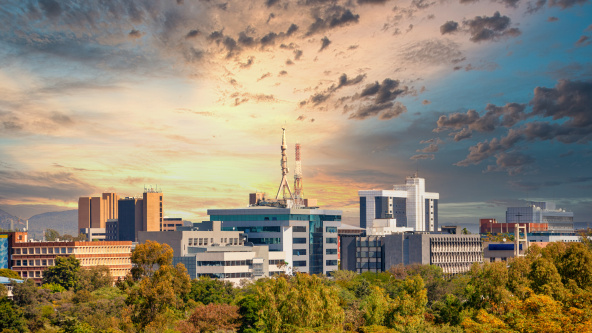
The city was built from a small railway stop in preparation for Botswana’s independence in 1966, so it essentially grew out of the desert. Gaborone has its own kind of beauty that is most apparent at sunrise and sunset when the sun’s colours are at their best, though it appears somewhat washed out about midday, especially under the summer sun.
The transition to life in Gaborone seems easy on the surface. There are grocery stores with recognizable fruits and vegetables, next to the dried merogo and phane worms, clothing stores with Western clothing, telephone and internet services, and cable and satellite TV. You can buy a cell phone, speak English, find spots with wi-fi, join a gym, go to restaurants and coffee shops, and use credit or debit cards. Difficulties arise when one has expectations that if something resembles a service from home, it will replicate that service, which is not always the case.
Gaborone has its own kind of beauty that is most apparent at sunrise and sunset when the sun’s colours are at their best.
What language is spoken in Botswana?
English is said to be the official language of Botswana, although the local language is Setswana. So you will find that most people speak English, including people working in the local grocery stores and household help. You’ll also hear many other languages, African and otherwise, being spoken, which makes Gaborone feel very cosmopolitan. Setswana can be interesting to study, but it is not required to get along.
Where to live in Gaborone
When you move to Gaborone, your first priority will most likely be housing and there are a variety of options from which to choose. Some people want to be outside of Gaborone in one of the nearby villages.
In Mokolodi and Gabane, you’ll find houses built using local materials and designs, which blend beautifully into the environment. In contrast, Phakalane has a range of housing available, more on the lines ranging from suburban-type dwellings to mansions. Many places have swimming pools and lovely gardens, despite the periodic water restrictions.
Agents, landlords, and leases
If your company doesn’t help you find your housing, there are numerous real estate agents available. When you do find a property, read the lease carefully, because there is often a clause indicating the rent will increase annually, and there appears to be no consistency with this number. Landlords can be inconsistent although, like anywhere, some are better than others. If a house appears to be in a dilapidated condition, don’t expect that to change quickly. Landlords are not all reliable when it comes to house repairs so best to find a house in the condition you are willing to tolerate from the start.
It cannot be said too many times, be sure to ask your real estate agent if there are any unwritten, yet expected, things tenants must do, for example, when vacating or maintaining the house. Many expats have landlord horror stories and security deposit nightmares due to unwritten expectations. Read your lease carefully, ask questions and write things down!
Getting started in Gaborone
Finding home help
If one wants household help — particularly to combat the dust problem — it is not difficult to find. Unfortunately, the unemployment rate in Botswana is high and many people come to the capital in search of jobs. Although there may be a constant parade of people ringing your bell asking for work, given that somehow everyone will know you are new in town, it is best to use word of mouth to find someone.
Start by asking your contacts whether the household help they have can recommend anyone. Most people look for housekeepers and gardeners, although some may hire cooks or guards too. To work legally, one needs an Omang card (a Botswana government identity card), which all Batswana have.
Healthcare and hospitals
TheDepartment of State has a list of private doctors, dentists, clinics, and hospitals. Additionally, there are several different local hospitals in villages near Gaborone, but it would be preferable to get a referral for a specific doctor from one of your friends or coworkers. You can also go to South Africa for medical treatment fairly easily.
Day-to-day living in Gaborone
Grocery shopping
There are a number of malls with South African-based grocery stores. Choppies is a locally owned chain found all over Botswana. Although many food staples are available all the time, not everything is stocked consistently. Almost everything is imported except eggs, some meats, and various vegetables, so they are dependent on deliveries from South Africa. Most shops let you know when they are having delivery problems. Quality of service can be unpredictable.
Sport, classes and activities
While the local market offers some opportunities for expatriate spouses to work, jobs are not always easy to find. Many stay busy with other activities, including sports, art classes, and social clubs.
Athletic activities are easy to access, including golf, tennis, swimming, or the local Hash, as well as working out at the local gyms. Although winters in Gaborone are not dreadfully cold, one cannot swim in an outdoor pool without a wetsuit or polar bear tendencies. Several local hotels also open their gyms for membership and several have outdoor pools, which can be a nice way to spend Sunday afternoon with the family.
Several local galleries offer art classes, including decoupage and pottery, and book clubs are popular, with several to choose from. There are various women’s groups which organize charitable activities, informational talks, and other social events. In addition, Gaborone has a number of churches that hold services in English and Setswana and several of them have women’s groups affiliated with the church.
Visiting game reserves
Mokolodi Nature Reserve, south of Gaborone, offers the opportunity to view game — either driving yourself or in one of their safari vehicles. It’s also possible to camp or stay in self-catering chalets within the reserve.
An added attraction to Botswana in general, is the number of wonderful places to visit to enjoy the wildlife. There is the Kutse Game Reserve in the Kalahari Desert, the Tuli Block in the east, Makgadikgadi Pans, Chobe National Park in the north, the Okavango Delta in the northwest. Accommodation ranges from simple camping to luxury tented resorts depending on location and budget.
Although rare, tragic accidents do happen so it’s best to exercise caution when staying on reserves. Do your research before the trip, carry the necessary equipment, listen to the guide if you have one and check in with park personnel to ensure an enjoyable trip to the unique places in Botswana.
The last word
Gaborone can be a great place to live but can be challenging as well. After the initial settling-in process, which can go on and on for some, you'll want to look for the many activities on offer, food that fills the stomach, intellectual stimulation that fills the mind, and friends that fill the heart to make it a worthwhile stay; and that can certainly be done.