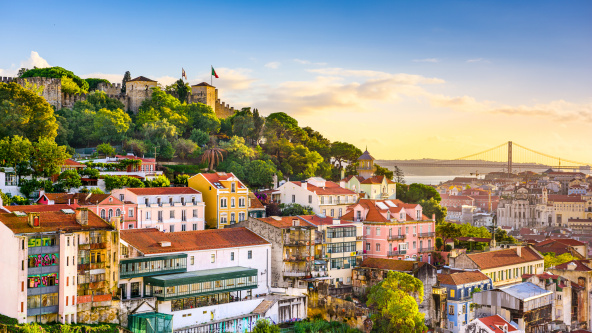
Living in Lisbon: an expat guide
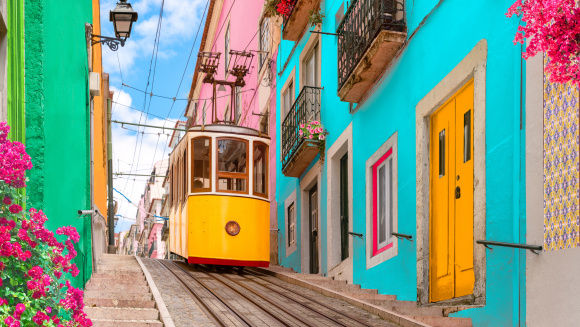
What to expect when moving to Lisbon
For such a small country (92,000 km2), Portugal offers a variety of landscapes from fertile valleys between Lisbon and Porto (also known as Oporto) to mountains in the northeast to the African-type plains of the Alentejo in the south. However, rubbish dumping and fly tipping are endemic so you'll have to learn to look past the lixo(rubbish) to enjoy some of the country's most scenic spots.
There are churches, stately homes, Roman remains, cromlechs, and dinosaur bones to explore. And of course, the sandy beaches are wonderful. During the bathing season (May to the end of August) young and old come to swim, wind or kite surf, or simply sunbathe and enjoy the cool breeze. Out of season, beaches tend to be nearly deserted and make for great walking and sunset gazing.
Speaking Portuguese
While most of the younger generation speaks good English, you will be thanked for trying a few words of Portuguese; there are language schools galore.
Remember to address anyone older than you as senhor or senhora — or doctor and doctora if they are professionals (everyone with a BA or higher degree is permitted to style themselves thus). Women will kiss once on both cheeks, men shake hands — and that counts for children too.
Family culture
Portugal is a culture based on extended families, and meeting local people is easiest if it is connected with business or with your children's friends.
Prices are high in Portugal and wages are relatively low. This means people tend to work long hours (alleviated somewhat by umpteen bank holidays) to make ends meet. Children are often looked after by grandparents or at nursery from the age of four months when their mothers' maternity leave runs out. After 4 o'clock there are homework clubs or activities (some available in English too). Middle-class children do not play in the street here. Not surprising given that drivers do not respect speed limits and stray dogs (usually harmless enough) trot about looking for scraps.
Where to live in Lisbon
Cascais and the surrounding villages
There are plenty of houses and apartments to rent in Cascais and the surrounding villages, the most popular location for expats (and well-off Portuguese). Unfortunately, that means a daily commute for those working in the city centre. The drive takes 20 minutes when the roads are clear, but in rush hour can last well over an hour, especially if there has been an accident (a daily occurrence, sadly). However, because so many expat families live here, weekend play dates and birthday parties are likely to be nearby — not to mention the coffee mornings and other social activities organised by and for mothers during school hours.
Many of the properties are well decorated and furnished, bright and sunny, warm in winter as well as cool in summer, and surrounded by shady gardens complete with a pool. And lots of reasonable ones — in safe neighbourhoods with utilities that function well. But be warned, almost any property over 15 years old will have draughts, quirky wiring, and old-fashioned kitchens, without the charm — think excessive tiling, aluminium-framed windows and humid rooms. In their favour, they were built at a time when land prices were lower and are more likely to have a decent-sized garden than today's handkerchief-sized lawns. All houses have shutters or blinds — closed during most of the day to keep out the glare of the sun.
Portugal offers a variety of landscapes from fertile valleys between Lisbon and Porto to mountains in the northeast to the African-type plains of the Alentejo in the south.
Some of the newer apartments and houses have lifts, central heating (big plus — most houses have no insulation and get miserably chilly in winter without working radiators), air conditioning and double glazing. A fireplace is another asset. Kids will love a pool of course, but brisk summer winds blow in the more north-westerly parts of the Cascais area so swims and alfresco dining will be a pleasure only if your garden is well-protected. Do listen out for excessive traffic noise — go back at night if you can.
Security and gated communities
Cascais is an affluent area situated fairly close to shanty towns and council housing. Break-ins can be a problem in the area although, on the whole, crime rates are low and violent incidents are particularly rare. Burglar alarms have yet to catch on, though many Portuguese homes have a dog as a deterrent — a job the dogs are liable to take as a licence to bark at all hours of the day and night.
Gated communities are becoming increasingly popular. The most mature of these is Quinta da Marinha, on the western border of Cascais, with its own stables, gym, golf courses, etc, and quiet, leafy lanes of (pricey) villas. New ones are sprouting up all over the place: to the west outside Malveira da Serra and to the north at Beloura I and II, Quinta da Patino and Penha Longa (with the latter the proximity of the car race track). Most offer attractive landscaping, shared or private pools and, of course, security.
Old Cascais and Estoril
However, more charming are the heart of old Cascais and the 1920s villas of Estoril, with bags of style and quirky details.
Both Cascais and Estoril offer a resort-type lifestyle (and are popular as holiday destinations too). There are great beaches, sports facilities, parks and playgrounds, good shopping, restaurants and nightlife, and a fairly extensive public transport network.
Living in Birre
Popular because of its quiet roads and generous plot sizes, Birre is characterised by pastel-coloured older villas. It’s just steps away from the Atlantic along with neighbouring Areia. The best apartments are along the Avenida 25 Abril in town, at Costa da Guia, and in the nearby seaside resort of Monte Estoril.
For a more rustic feel, try the villages running north along the cliffs from Charneca to Azoia (and further if drive times are not an issue) for great sea views on one side and rugged hills on the other.
Living closer to Lisbon
Towns closer to Lisbon are also a viable alternative, particularly if you don't want to live in an expat ‘ghetto’. Towns like Carcavelos, Oeiras, and Paço de Arcos have expanded rapidly in the last decade or so. The newer neighbourhoods (those around St Dominic's School and IPS) are often dormitories for Lisbon commuters, but each has its bustling original centre as well.
With a bit of luck, you will find a good flat or house at considerably less than Cascais prices. There will be a hole-in-the-wall shop down the road selling everything from salt cod to clothes pegs, and you'll be able to walk the children to school in the morning or use public transport. Many foreigners live in the capital itself and love the combination of sophistication and slightly down-at-heel charm.
Using an agent
The property industry is under-regulated and there are dozens of agencies; several are owned by English speakers or employ English-speaking agents. Be very clear about how many bedrooms you want, whether you prefer furnished (frequently dark, gothic pieces in carved wood) or unfurnished, and the area you are most interested in. This will help you to avoid being led on an exhausting tour of all the properties in an agent's portfolio.
Signing contracts
It is worth trying to bargain, though landlords can be surprisingly stubborn about waiting for the price they want. Once you sign the contract (prepared by the agent), you will be asked for three months' rent in advance — the first month, the last, and one month's deposit. Most landlords will also require a fiador, a local guarantor in case a tenant falls behind with rent payments, though this shouldn’t be an issue if you're here with a big corporation.
Buying a property
There are lots of properties for sale too, and mortgages for foreigners, if you are willing to brave the red tape. More of a worry is the fact that the market is currently over-supplied and the house may not hold its value. Try before you buy if you possibly can, to see the different neighbourhoods for yourself, to catch their flavour and decide what would suit you and your family best. There are also several online forums dedicated to helping (prospective) newcomers.
Estate agents and landlords are used to dealing with foreigners and are almost always welcoming and helpful.
Getting started in Lisbon
Utilities
Water is metered — it's a precious commodity as it barely rains from May to October. It and other utilities are among the dearest in Europe. Houses will have a landline telephone service, but you’ll need to apply for ADSL (broadband) for the internet. For mobile phones, there are several suppliers, all keen to lure customers with the latest handsets at subsidised prices.
Opening a bank account
To open a bank account you will first need a numero contribuente (fiscal number) from your local branch of the Finanças (Inland Revenue) — not as intimidating as it sounds, just be prepared to queue. The bank will also want proof of address (utility bill in your name, which may be tricky, or bring along your rental contract), or you will need a guarantor. Tellers sit at counters or desks, not behind bulletproof glass, which is rather nice. Whether you are served with a smile entirely depends on the person, here as in the shops and at the utility companies and government bodies.
Finding home help
Once you've moved in, you'll probably want someone to do a few odd jobs and add a lick of paint perhaps. Though landlords are technically responsible for any work required on the outside, they can be surprisingly stubborn about this too. If you did not manage to persuade them to do it before you moved in, get it done yourself and try to deduct the amount from the rent.
The best way to find repairmen, maids, and gardeners is by word of mouth. Since the EU expansion, these people are as likely to be Romanian or Ukrainian as Portuguese. People looking for this kind of work also paste up their phone numbers at the entrance of the supermarkets most popular with expats. Do get a reference.
Most won't expect you to sign an official contract and pay social security: you'll be paying cash. But if you do have a contract, traditionally workers in Portugal receive the equivalent of an extra month's wages at the beginning of August and at Christmas. Agree on this, and holidays, before the person starts to work for you.
If you find a good maid, she will form an invaluable part of the family, even if they usually don't speak English. Most are great with kids, willing to help in the kitchen and follow your instructions. And they'll be in to receive the gas man, the plumber, the electrician, or the grocery delivery. Continente, a Portuguese chain of hypermarkets, offers online orders, and most others will deliver to your door.
Health insurance
Private medical insurance is recommended to help defray the cost of seeing a private doctor and ensure you get medical attention promptly if something more serious occurs. Hospital doctors and specialists are well-trained and almost all speak English, but state hospitals are under-funded and their services over-subscribed because the primary health care system does not work. Hospital emergency departments operate fairly well, particularly for paediatrics, but for routine treatments or scheduled operations, private medicine will probably serve you best.
Day-to-day living in Lisbon
Public transport is reliable and cheap, but limited in range, and taxis are not as affordable as they once were — a car is recommended.
Importing or buying a car
If you are importing your car without the help of a relocation agent, contact the local automobile association, the ACP. They will advise you on the bureaucracy involved and the documents required to drive here legally.
If you plan to buy a car, the ACP will inspect second-hand cars for soundness and reliability, for a small fee. New cars are more expensive than in northern Europe because of high taxes. You wouldn’t know this from the amount of shiny new 4-by-4s hurtling around Cascais — cars are the number one status symbol after clothes, usually bought on credit — but in the countryside, venerable old Renaults and Opels rule.
Driving
Once on the road, a pair of eyes in the back of your head will come in useful. The accident rate is one of the highest in Europe, thanks to speeding, reckless overtaking, and poor signage. On the plus side, there is a network of modern motorways that will get you from Lisbon to the Algarve in less than three hours (at legal speeds), and beyond to Seville in Spain in about five. Tolls are payable on most motorways — get a Via Verde box from toll operator Brisa to avoid queuing.
You can also use Via Verde to pay in some car parks. Illegal parking is rife, despite intermittent car clamping/towing by the police. If you get caught the fine is hefty as it is if you are caught speeding, driving under the influence of alcohol, or you do not have your papers with you.
Grocery shopping
Raw ingredients here are excellent: fruit and veg, fresh fish, aisles full of olive oil and cheese. Organic and ready-prepared items are still in their infancy, but imported items are fairly easy to find. Traditional farmers' markets are held weekly in most towns and sell produce and flowers, and sometimes also an eclectic mix of cheap clothing made locally for international labels (particularly good for kids' stuff), and live chickens and rabbits.
Butchers can be a little intimidating, with their unusual cuts of meat, but there's always chicken breast or minced beef. Bakeries often offer great coffee — from bica (expresso) to galão (milky coffee) — as well as good bread and delicious pastries (try a pastel de nata, a sort of crème brulee tart). If you love tea with milk, best to have it at home.
Eating out and going out
Portuguese people love to eat out at lunch or dinnertime and there are lots of restaurants to choose from, specialising in seafood and fish, piri piri chicken, or rustic regional food. You will also find Brazilian grills, Michelin-starred French restaurants, sushi, pizza, chop suey, and chicken tikka. While restaurants don’t open before 7 pm and don’t fill up until 9 pm, children are welcome and are quite as likely to stay out until midnight as the adults.
Village bars tend to be men-only affairs complete with TV showing the footie (a national obsession) but towns and cities will offer something more sophisticated, as well as discos and multiplex cinemas (everything is subtitled at the latter, except for children's films which are dubbed).
In Lisbon, there are world-class classical music, jazz, and performances by international stars on tour. English-language tours of musicals also sometimes make it to the big cities. For a really Portuguese evening out, try Fado music, the age-old lament of sailors' sweethearts and mothers.
Shopping
Shopping is easy. Malls have sprouted up outside every town and are open late into the evening. High street shops are more likely to close for lunch, but almost all will be open six or seven days a week. Malls are busiest at weekends when out-of-towners bring the whole family to browse and have a coffee.
If you are looking to send presents back home, there is fun pottery made for the tourist market, but also fine linens, Atlantis crystal, and Vista Alegre porcelain. El Corte Ingles, the only department store in Portugal, has the best selection of top-quality items. And for furniture, if your taste is not for heavily carved wood, there is always Ikea.
For fashion, check out Spanish chains Zara and Mango. People pride themselves on their appearance: blow dries, manicures, and waxing are surprisingly affordable. The ubiquitous cobblestones murder high heels, but women wear them regardless. Children are particularly well turned out; neatly scrubbed, coiffed, and shod.
Don't be surprised to be tutted at if your child sports a chocolate beard after eating an ice cream in public. Conversely, a pretty child will be universally admired and cooed over.
Meeting new people
Though expat numbers are fairly low, meeting other foreigners is easy. Most international schools go out of their way to introduce parents to each other. Services in English are held at several churches and there are groups doing voluntary work. There is also a mass of sporting associations, an English-language amateur theatre group, several choirs, and golf galore. International Women in Portugal offers an invaluable range of activities, support, and contacts. There is also an American Club and a British Chamber of Commerce which organise more business-orientated events.
The last word
Lisbon offers foreigners a high quality of life without breaking the bank. Combined with a pleasant climate, rich cultural heritage, and vibrant social life, what’s not to like?