
Living in New York: an expat guide
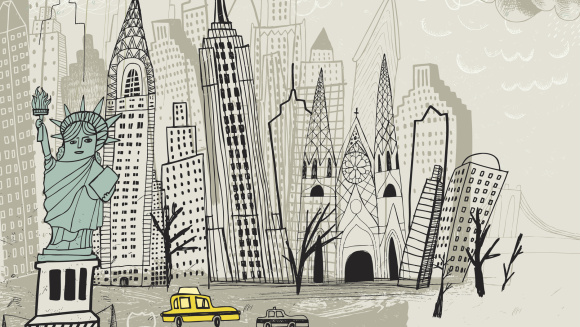
What to expect when moving to New York
New York is an expensive place to live with eye-watering rents, especially in Manhattan. Parts of Brooklyn are now very popular and can be just as expensive, especially near a subway stop. Of course, you get much more for your money in Jersey or Long Island City if you are willing to commute.
It’s quite unusual for New Yorkers to entertain at home in the city, mainly because of their limited cooking and dining space, as well as the risk of the noise disturbing sleeping children in a small apartment. A lot of professionals have vacation homes in the Hamptons, Connecticut, or ‘upstate’, and if you are lucky you might be invited to join them there for a weekend. Otherwise, most people meet up with friends at bars or restaurants, even if it means paying for expensive cocktails and a babysitter.
If you are invited to someone’s home, it may be less formal than you are used to. You may be told to help yourself to drinks and platters of food, instead of sitting at the table for a formal meal. You may even get a delivery from their favourite restaurant rather than a home-cooked meal; just be flattered that they feel comfortable having you in their home. As in most cultures, it’s polite to take a bottle of wine or some quality chocolates.
Tipping
Tipping is standard here and needs to be factored into your budget. The minimum wage in NYC is lower for restaurant staff, as tips are expected. Be prepared to tip on every customer service transaction, from a dollar a drink sitting at a bar, to 15-20 per cent in a restaurant or at your beauty salon. You will be expected to tip your building staff generously during the holiday season — everyone from the building manager to the handyman. Don’t worry about remembering everyone’s names as you will probably be provided with a list in advance!
Weather and climate
New York can be uncomfortably hot and humid in the summer and cold (but often bright and sunny) in the winter. If you are dressed appropriately the climate is generally manageable. There isn’t always snow but you will need boots and a long coat, hat, scarf, and gloves on most days from December to February, and a sunhat, sunglasses, and light cotton clothes from May to September. The spring and autumn/fall are normally beautiful!
If you are stuck in the city with children over the summer, head to the outdoor public pools and water playgrounds. You can always retreat inside a shop or restaurant to cool off in their air conditioning. Most bookstores have a café and are a good place to spend a couple of hours — no one minds if you sit and read one of the books off the shelves. The museums, galleries, and public libraries are also good places to visit in the midday heat.
Is New York a safe place to live?
Most parts of New York are as safe now as any big city, which means you should stay alert at night and stick to well-lit streets as much as possible. The rougher neighbourhoods tend to be in Harlem, The Bronx, and certain parts of Queens, where any violence is centred around drugs and gangs.
New York offers a unique living experience, equally expensive, exhilarating, and challenging.
Gun laws are strict in New York compared to many other states, with open carry not allowed. However, you may want to check there are no guns, or that guns are safely locked away, before allowing your child to go to a school friend’s home for the first time.
Most schools have strict security with passes for all students and parents checked at entry points. Schools run regular lockdown (active shooter) drills which, unfortunately, become as normal to students as fire drills.
Where to live in New York
Born and bred New Yorkers advocate passionately for their immediate neighbourhood and form a vice-like attachment to the restaurants, cafés, and corner shops within their seven-block patch.
Living near school
As parents, try to be within easy reach of your child’s school. To take advantage of the free yellow school buses which the city provides for every student from ages 5 to 11, whether at public/state or private school. Find out in advance the routes they run to your choice of school; you may have to walk your children a few blocks to the nearest stop. If they are older, choose somewhere they can walk to school on their own or consider the bus and subway routes carefully to minimise travel times and transfers. All students who live more than half a mile away (and don’t take the school bus) get a free MetroCard.
The reputation of the United Nations International School (UNIS) and the British International School (BISNY), situated next door to each other on the East River, means that students travel there from a wide area, even on the ferry from Dumbo, Williamsburg, or Long Island City.
The M15 bus, which travels regularly up First Avenue and down Second Avenue, makes many neighbourhoods from the Upper East Side to Battery Park easily accessible to these schools. Most children cope with travelling on the bus alone by the end of middle school. It is generally considered easier for children than sending them on the subway on their own, although plenty do this too, once they are used to the system.
Living near a park
Also consider proximity to a park or playground, especially if you will not have outdoor space at home. While gyms, swimming pools, and indoor playrooms are common in many apartment blocks, there is no substitute for getting your kids outside for a runaround, especially if school sport is limited. If you have energetic children and/or a large dog you may want to live close to Central Park, so they can let off some steam.
Others live nearby in Stuyvesant Town (Stuytown for short, pronounced Stye-town) or the adjacent Peter Cooper Village. These huge, private post-war residential blocks (110 of them) are dotted with playgrounds, basketball courts, and other amenities.
Right on the doorstep of BISNY is Waterside Plaza, where kids of all ages meet up after school to kick a ball around in the courtyard. However, the wind whistles through this development and it can feel cut off from the rest of the city by the busy FDR Drive (though there is a footbridge).
Getting started in New York
Healthcare
Register with a local paediatrician as soon as you arrive, asking your insurance company for a list of approved practitioners. Vaccinations are numerous and compulsory for attending school, and most private schools require an annual summer health check.
In New York, you have easy access to every specialist you might need, but check with your insurance first if you are in any doubt, or you could be landed with a hefty bill.
You can get your prescriptions and any over-the-counter medications at a Duane Reade or CVS pharmacy, which are on every block. Many are open late and serve as a mini grocery store too. Sign up for their loyalty scheme to accumulate points and save a fortune.
Day-to-day living in New York
Getting around
Taxis and Ubers are reasonable and easy to find unless you’re leaving the theatre district at 10 pm on a Saturday night. Public transport is good value and covers any trip, including transfers. However, the subway system has suffered from years of under-investment and many commuters would happily pay a bit more to see it being brought up to date. At least contactless (OMNY) keypads are now in many stations, but only one in three has an elevator which means anyone with a wheelchair or stroller needs to plan their trips carefully.
Eating out
Eating out is a huge part of life in New York. Many locals hardly cook for themselves, and even luxurious apartments can have tiny galley kitchens. With the huge variety of cafés and restaurants on offer at every price point, you may not mind. However, once you add on the sales tax and tip you can easily spend more than you had planned to, whether it’s a deli sandwich (though it will be huge and delicious) or a meal for two at a smart restaurant, especially if you opt for a decent bottle of wine.
Grocery shopping
New York streets are plagued with chains of grim grocery stores such as Morton Williams, D’Agostino, and Gristedes, which seem to be designed to lower your spirits while simultaneously emptying your wallet. But don’t despair, as just a bit further afield you can find a Trader Joe’s, and the savings will warrant the cost of a taxi home. The range of goods may be limited, but the fresh, quality produce costs a fraction of the price of other stores. There are many organic options as well as hormone and additive-free beef and chicken. The frozen food is well worth a look too. Don’t worry if there’s a huge queue as there are many checkouts and it’s all very quick and orderly.
Alternatively, a Whole Foods Market is a good, though expensive, option. Many New Yorkers shell out for a grocery delivery service such as Fresh Direct, but you may find you need a second mortgage to join them.
Shopping
While the Madison Avenue designer boutiques and famous department stores offer good window-browsing potential, bargain hunters visit TJ Maxx, Nordstrom Rack, and Century 21. Here you can find your pick of designer clothes, sports gear, luggage, handbags, and home wear often at ridiculously low prices, especially if you are prepared for a bit of a rummage.
Otherwise, high-street stores like Zara, H&M and Gap are well-represented here. Uniqlo has its huge flagship store on Fifth Avenue and is great for basics and padded coats. Also, look for Cos and & Other Stories for women’s clothes, Brooks Brothers for classic work clothes for both men and women and North Face for good quality (though pricey) outdoor gear.
Where to go and what to see
Take out a library card with the New York Public Library, and you’ll be able to borrow passes and make reservations for two or four people at nearly all the top cultural institutions throughout the city. Everyone knows the Metropolitan Museum of Art, of course, and if you go before it gets too busy it is a wonderful place for all ages. Kids tend to love the Egyptian artefacts above all — especially if they’ve read the Horrible Histories books or studied the period at school. Do it in bite-sized chunks instead of trying to see everything in one go — that’s true for adults too!
The American Museum of Natural History is a given for families. Who can resist the dinosaur exhibition, the planetarium, and the famous giant blue whale model? Not to be missed is the Intrepid Sea, Air and Space Museum, a former aircraft carrier moored on the Hudson River, which boasts an amazing display of aircraft on its desk, and even a Concorde alongside it.
Kids may enjoy some of the modern art at MoMA or the architecture of the Guggenheim, where they can imagine Mr Poppa’s penguins sliding down the circular ramp. History buffs young and old will enjoy the Tenement Museum and parts of the New York Historical Society. Take the train north to visit the Bronx Zoo or the adjacent NY Botanical Garden, which is a great place to stretch your legs and get your fix of greenery. At Christmas, there’s a wonderful model railway display which is worth a visit in itself. The small zoo at Central Park is good for primary-age children.
Central Park
Central Park is a wonder in itself, and it’s no wonder that tourists and locals alike flock here on a good day. Every time you visit you will find something different to do from climbing on the rocks to rowing boats on the lake or sailing model boats on the Conservatory Water. In the summer months, swim in the outdoor public pool, have a picnic on the Great Lawn, or play tennis or beach volleyball. Count the turtles in the lake, listen to the myriad of buskers, and watch the street entertainers strut their stuff at the top of the steps down to the Bethesda Fountain. For more classical entertainment go to the Shakespeare in the Park performances throughout the summer. Visit the John Lennon memorial at Strawberry Fields, climb on the Alice in Wonderland statue, or let your kids loose at the numerous playgrounds. There are plenty of restrooms and water fountains.
In the colder months you can ice skate on one of two outdoor rinks at a cost (it’s cheaper if you bring your own skates). On an increasingly rare snowy day, especially when school is cancelled, tobogganing is great fun for all. The best slopes are Cedar Hill (gentle, for younger kids) and Pilgrims Hill (steeper).
The last word
New York offers a unique living experience, equally expensive, exhilarating, and challenging. With nearly 40 per cent of its 8 million residents being foreign-born, you will never be far away from someone from your home country, which may be a relief when it all gets too much for you. But once you get used to life in the city that never sleeps you might find you can’t imagine living anywhere else!