Living in Rome: an expat guide
What to expect when moving to Rome
Rome is generally considered a safe city. There are stories of burglaries and bags being snatched from bicycle baskets — but violent crime is not common.
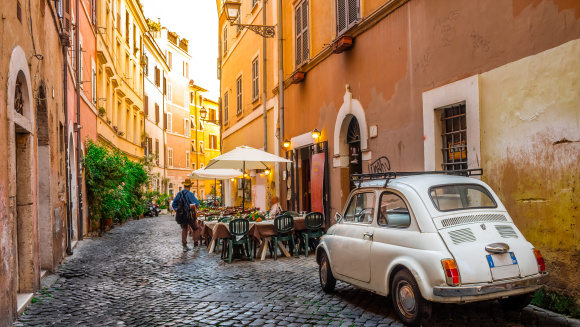
Streets are vibrant and alive with family life. While there aren’t a large number of green spaces, people use the main streets at twilight for a leisurely promenade, and whole families meander along the streets. As evening deepens, families can be found eating out.
Then the streets fill with young people meeting up in local squares or in the Campo del Fiori where they go from bar to bar to see who they know. Danger in Rome, if anything, comes mostly from cars and motorbikes.
Where to live in Rome
Everyone agrees that transportation is one of the hardest practical aspects of living in Rome, so the first decision to make is whether you want to live outside the centre of Rome where you could have a house, a garden, and parking, or in the centre of the city where it is nigh on impossible to find all these three things in one home.
Apartments
The apartments in central Rome are all small; since Italy has the lowest birth rate in Europe none but the very largest apartments have three bedrooms. Some have terraces from which you can see hundreds of green oases tumbling over the pink terracotta roofs. But almost none will include parking. With a city centre that you can easily walk across in 20 minutes, people who live in the bustling, historic heart of Rome only use their cars, parked at some distance, to make the weekend exodus to the countryside or coast.
Houses
There are houses and larger, more modern flats in apartment blocks in the up-market area of Parioli, on the outskirts of the city centre, and in the small satellite towns around Rome. These offer everything you could want in a glorious Italian home — except the romance of walking to the Pantheon or the Campo del Fiori market.
Peculiar to Rome is that kitchens are often small. Electricity connections are complicated by the range of different socket sizes and plumbing, especially in the centre of town, is often ancient and slightly decrepit — so check water pressure by turning on showers as you look at potential accommodation.
Relocation companies and estate agents can guide you through the house-hunting process and you will find accommodation listings in the invaluable (English-language) ‘Wanted in Rome’ magazine and website.
Getting started in Rome
Opening a bank account
Opening a bank account involves time and patience and some amount of paper chasing. Essential for opening a bank account is an Italian tax code (codice fiscale), ID such as a passport, a valid Italian address and proof of address such as a utility bill. Non-Italian banks tend not to need the same amount of chasing round and are well worth exploring for a simpler account-opening experience.
Finding home help
While many people do spend time in the markets and local shops, Italian families are used to having domestic help. It is not unusual to have both a cleaner and someone to help with children and even a driver as well. Many Italian families have a housekeeper who comes daily to clean, iron, shop, and cook.
Since families with two working parents often have help, it is highly likely you will find help by word of mouth from neighbours or, if you live in an apartment block, from the doorman/porter. The latter is usually a great source of information for any type of help and can be a first port of call when looking for repairs or technicians.
Learning Italian
While shopkeepers, taxi drivers, housekeepers, and the doorman are almost always helpful and honest, they rarely speak English. They love it if you try to speak some Italian and are used to using their hands to make themselves clear. But nothing will beat learning the language. Rome is full of language schools, which may well be your first port of call when getting to Rome. Italians are very keen to learn English and this can be used to agree to language exchanges (one hour of Italian in exchange for one hour of English) which means that families with English-speaking children are welcomed into Italian families in the hope that they will learn each other’s language.
All the international schools have a proportion of Italian-speaking children and this provides a chance for your children to speak Italian. Most private schools will have more native Italian speakers than non-native so children may well feel left out if they don’t learn Italian.
Day-to-day living in Rome
Getting around
Public transport in Rome is inexpensive but notoriously unreliable. Having said that, when it is running well, buses are very regular and the metro lines are a quick and efficient way of getting around town.
Driving in Rome is chaotic and not for the faint-hearted. The roads are narrow, many are one-way, and limited traffic zones are often active.
Children from 14 years old are allowed a 50cc motorbike in Italy. Most expats are wary of the roads here and are reluctant to have their children on bikes, though they are aware that this frequently leads to their children being on the back of someone else’s bike — often a worse scenario.
Another temptation is the macchinetta, a 50cc engine in a flimsy car that gives young people freedom on the roads before they can use a proper car at 18.
If you do want to make the most of everything Rome has to offer, with so many visitors tourism is very well catered for and a true delight.
Shopping
This is an Italian pastime and a pleasant way to pass a Saturday afternoon in the Corso with a full wallet and a need/desire for shoes or some beautiful leather accessory. Italy has a high number of specialist and individual shops, though large chains are ubiquitous as in most European cities.
Despite the large out-of-town malls, most of the shops in Rome are much smaller than would be found in other countries. The trick is to do a large monthly shop out of town, and local shopping the rest of the time.
There are small supermarkets in most blocks –— some will deliver and most have good deli counters with prepared food. Invest in a shopping basket on wheels like your grandmother once used and hike off to the market to fill up with wonderful fresh vegetables and fruit and practice speaking Italian at the same time.
All very time-consuming but that is how the Romans do it, and since most kitchens are small you may not be able to store more than a few days’ worth of groceries at a time. Build shopping time into your timetable.
Sport and activities
Sport is more of a spectator event than something an Italian does regularly — particularly worthwhile is a trip to the Olympic Stadium where Rome’s two football teams, Lazio and Roma, alternate in weekly matches.
There are gyms in Rome and some yoga studios, though not nearly as many as in the US or UK, nor are these such popular activities. However, there are good tennis clubs — great places to play and to meet people. There are also football clubs for children, which can be a way of meeting Italian children as well as getting exercise.
Swimming is seen as a summer activity when pools open up along the Tiber and people head off to the nearby beaches and lakes.
The last word
With Rome being such a vibrant but chaotic city it’s good to know there are plenty of opportunities to have a break if needed. Access to all major Italian cities is possible with Trenitalia, the primary train operator in Italy and the high-speed Le Frecce will get you from Rome to Milan in just three hours. Regular flights from airports in Rome, Fiumicino, and Ciampino mean you’re well connected with other European countries, and the port of Rome at Civitaveccia has boats going to Corsica, France, and Barcelona if you’re looking for a slower journey pace of travel.
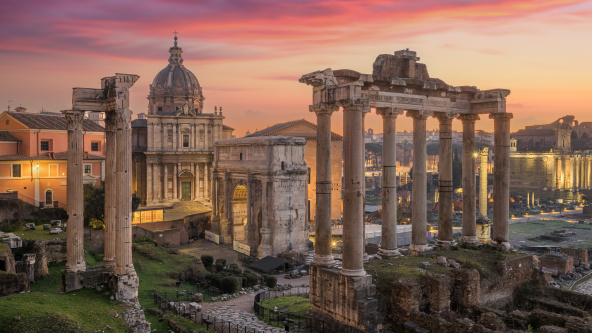
If you do want to make the most of everything Rome has to offer, with so many visitors tourism is very well catered for and a true delight. A view of St Peters early in the morning, sunset over the Forum, a bicycle ride along the Tiber, and Sunday walks with frequent stops for coffee and ice cream and innumerable restaurants to try out all these will make it clear why all roads lead to Rome.