Living in Shanghai: an expat guide
What to expect when moving to Shanghai
Shanghai, along with Beijing, is considered the most sophisticated of the major Chinese cities. Even so, you will see a huge variation of poverty and wealth.
It can be frustrating to live here, and there will be times when you have to grit your teeth to get through the day. When you do finally overcome all obstacles and achieve your goal, you’ll experience a sense of triumph that is probably disproportionate to the task in hand!
With a population of over 24 million people, Shanghai is a huge city, and trying to buy what you had previously thought of as an everyday item, or achieve something relatively simple when you have no idea where to go and don’t speak a word of Chinese, can lead you on many a wild goose chase.
You can get pretty much everything you need in Shanghai: the tricky part is knowing where to go. But with time it all gets easier — your household jobs will eventually get done, and within a month or so you will have found where to buy the best food and sorted out a regular meat and fish delivery, a yoghurt man, and worked out where to top up on your favourite make-up and moisturizer brands. Ask your neighbours and listen to the voices of experience.
How polluted is Shanghai?
There are many days when the sky looks clear and the air feels fresh, especially in the autumn and spring when the weather is generally extremely pleasant (think light sweaters and sunglasses).
However, there are days when the pollution is obvious and there is a haze around taller buildings. Nobody really knows exactly how much pollution there is — it is hard to find definitive figures — and whether short-term exposure to the levels of pollution in Shanghai will cause any lasting damage. Most residents do not torment themselves by worrying about it.
The city has reaped the benefits of a vastly improved road system, a huge number of additional Metro stations, and several thousand more trees planted. Shanghai has seen significant improvements which shows how rapidly things change in China.
Learning Chinese
Many people move to Shanghai with good intentions of working hard to crack the language, and a few admirable souls do just that. The rest tend to take some kind of basic course, find that Chinese is really hard and stop the lessons.
Whatever your approach to learning the language, don’t feel too disheartened by your initial (and maybe lasting) inability to speak Chinese. You will get by just fine. Shanghai has the most English speakers of all the Chinese mainland cities. If you get really stuck, there are translation services you can subscribe to where you dial in, explain the situation and your needs to the translator, who then communicates for you.
Where to live in Shanghai
One of your most important decisions will be where exactly to live in the sprawling mass that is Shanghai.
The starting point is to narrow it down to Puxi (west of the river) or Pudong (east of the river). In the same way that people who live in London are very clear about whether they prefer north or south of the river, Shanghai residents are very divided about the Puxi/Pudong debate.
Living in Pudong
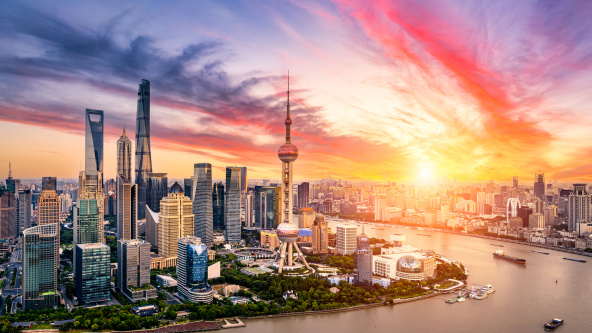
Pudong is the newer side of the city and continues to develop fast. The spectacular high-rise buildings close to the river give it a huge ‘wow factor’ — visitors are often shocked by the sheer scale and modernity of the place. But, it doesn’t have the same charm as some parts of Puxi. If you live in Pudong you will probably go over to Puxi a couple of times a week, if not more, to shop, check out the best restaurants, or just wander around absorbing the atmosphere.
The three main areas to consider are Jinqiao, Kangqiao, and Lujiazui (or downtown Pudong). Jinqiao is a pleasant, popular area with a strong community feeling where it is safe to cycle around, which can feel wonderfully liberating as it frees you from having to rely on your driver. Dulwich College and Concordia International School are both five to 10 minutes from the main housing compounds, and the Shanghai American School Pudong is about 30 to 45 minutes away.
The journey to Lujiazui will take between 30 to 45 minutes depending on traffic. Getting over to the French Concession in Puxi can be very quick (30 minutes in light traffic) or it can still take up to an hour in heavy traffic.
Kangqiao has several housing compounds, which give easy access (five to 15 minutes) to the Nord Anglia International School Pudong and Shanghai Community International School (SCIS) Pudong.
Getting to Lujiazui and to Puxi can take anywhere from 30 minutes to over an hour depending on traffic. Many people are very happy with the housing in Kangqiao but feel quite isolated because of the long journey times and the lack of anything appealing outside of the housing compounds.
Lujiazui is really downtown Pudong — think the Pearl Tower — and if you live here you will probably be living in an apartment, often with a spectacular river view, and get a real sense of living in the city as opposed to Jinqiao and Kangqiao, which feel much more like suburbs.
Living in Puxi
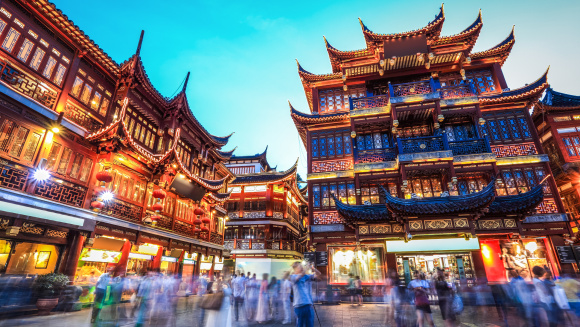
Pretty much all of the fun stuff is in Puxi, especially in the old French Concession area and around The Bund. If you live in Puxi, you will view Pudong as some peculiar extension of the city and are unlikely to ever need to go there. Both sides of the river have plus and minus points.
Many families head for the southwest of the city to Gubei or Hongqiao, both of which are much more established expat communities than those in Pudong. Both areas give reasonable access to most of the international schools in Puxi including the Western International School, Shanghai Community International School (SCIS), BISS Puxi, and the Shanghai American School.
It’s a very spread-out area, so journey times will depend on exactly where you live, but you are probably looking at a journey of between 20 to 45 minutes to get to the schools mentioned. Getting to the French Concession will take somewhere between 20 to 40 minutes, again depending on where exactly you live.
Other alternatives
Living further into the centre of the city is also feasible, and will give you a very different, much less sanitized, experience of Shanghai. There are some apartment blocks with amenities (pool, gym) and some beautifully atmospheric lane houses and apartments, where your neighbours will most likely be Chinese.
You will be able to walk to top restaurants, funky cafes and bars, and browse the quirky boutiques that give the French Concession its peculiar charm. However, lengthy journeys to school mean many families with older kids tend to polarize to either side of the city closer to the international schools.
Commuting
Ultimately, your decision is going to be influenced primarily by the location of schools and the location of the workplace. Most people do not want to inflict a long commute on their children (and by that, we mean up to an hour on a school bus in hectic traffic) so opt to live close to the school their children attend, with the working spouse doing the commute.
Bear in mind that if you have a driver, that commute is nowhere near as unpleasant as most public transport heading into London. Your working day starts from the time you get into the car, and finishes when you are dropped off at home — the car becomes an extension of the office.
If the school and workplace are on the same side of the river, your choice of where to live should be a no-brainer but there are plenty of families who manage perfectly well with school and workplace on opposite sides of the city.
Getting started in Shanghai
The expat community here is very supportive. You might ask a complete stranger where to buy bread and end up organising a play date for the kids. One thing you won’t struggle to do is to make friends. Even the toughest expat has experienced the initial disorientation on arrival, and there is a great sense of camaraderie amongst the non-working partners.
Joining a club
Shanghai is home to a lot of interesting people and there are lots of clubs and organisations to help you settle in. Some of the more popular social ones include Brits Abroad, the American Club Shanghai, or try looking on expat Facebook groups in Shanghai which offer a large selection of options for meeting up.
Shanghai is home to a lot of interesting people and there are lots of clubs and organisations to help you settle in.
The Community Center Shanghai is also popular and runs short courses on a whole range of varied topics including cultural orientation, trips to the local markets, Chinese medicine, calligraphy, and finding your ideal career path. They also run counselling sessions with counsellors who speak 10 different languages and workshops for children. There are three centres, one in Pudong, one in Minhang, and one downtown at the Ambassy Club.
Healthcare
Health issues are a big concern for many people moving to China. The general approach amongst expats is to avoid local hospitals and clinics. People use private clinics for minor complaints and, assuming time permits, fly to Hong Kong, Singapore, or back home for more serious conditions. There are several hospitals that have special wings catering only for foreigners if you need treatment locally.
Having a baby here is generally considered safe. You should also check that your employer has appropriate medical insurance in place for you and your family and that your vaccinations are up-to-date. Shanghai is not the cleanest place, but you will probably be frequenting the cleaner parts of the city, and provided everyone maintains basic levels of hygiene, and fruit and vegetables are washed well in purified water, you should be fine.
Banking
The banking system in China for foreigners can be frustrating, but like most things here, once you have adjusted your expectations, it is not a problem. You will use cash to pay for things much more frequently than you are used to. Most people open an account with a local bank (Bank of China and China Merchant Bank are popular) and use a foreign credit card for larger transactions.
To open an account you will need your passport and your resident's permit. Any transfer of money into the account from your overseas accounts will come into the local account in the currency of transfer. You must then go into the bank with your passport and passbook to request that this be changed into RMB so you can draw on the account.
Some people use their overseas accounts and credit cards for everything, but this will incur significant bank charges and means that you will have to pay in cash for almost everything. Operating your finances this way may tide you over in the short term but doesn’t make sense in the long term.
Finding domestic help
Almost everyone has a full or part-time ayi (which translates as ‘auntie’). Some ayis will live in your house if you wish. Her duties will include cleaning, washing, and ironing, helping to look after the children, and maybe some cooking. It can also be handy to have a local around to deal with workmen to explain problems in the house.
Domestic help in China is very cheap, but it can be difficult to find an ayi who speaks good English. When you arrive in Shanghai and are established in your home, ask around for personal recommendations. There is a huge turnover of families coming and going and it is best to get a recommendation if you can.
Day-to-day living in Shanghai
Cars and drivers
The driving can be hair-raising at times and it takes a very gutsy expat to get behind the wheel of a car in Shanghai. Most expats do not opt to get a Chinese driving license (although they are fairly easy to get) and instead employ a driver. Your driver is unlikely to speak anything more than very basic English.
There are numerous leasing companies and your employer or relocation agent should be able to give you advice on how to go about organising a rental and driver. Because driving yourself around is generally deemed dangerous for expats, most companies include some kind of travel allowance in expat employee packages.
Be warned that understanding how the expenses relating to your car and driver are paid can be a bit of a minefield, and everyone seems to have a different payment structure. The best option, if you can get it, is that the company pays the whole lot, ie rental of the car, driver’s salary, fuel, parking charges, overtime, and driver’s meals. However, a lot of people end up shouldering some of the expenses themselves. Just make sure you understand what you are paying for and ask colleagues for advice.
If you have to rely on taxis, you will be adding a lot of stress to your day-to-day life. Older taxis do not have seat belts in the back seat and the standard of driving is somewhere along a range from bad to death-defying.
Grocery shopping
A few of the larger compounds in Puxi and Pudong host popular weekly farmers' markets, where you can get good fruit, vegetables, meat, flowers, bread, and imported frozen fish. Ask neighbours for times and locations. Most of the vendors will also deliver to your house, as will numerous online companies.
There are also lots of smaller shops springing up, which cater for expat tastes with many French bakeries and cafés producing scrumptious cakes, freshly baked bread, and delicious pastries.
Don’t drink the water
Drinking tap water, even if it is boiled, is not recommended. Most foreigners use purified water for brushing their teeth, cooking, and drinking. Your home should be kitted out with a water dispenser, which will hold a 15-20 litre bottle of water. If you are moving from Western Europe or the US, this will feel like a big change, but it’s really not a problem and you will quickly adjust to wandering over to the water dispenser to fill your kettle.
Sports
If you are interested in sports, most social organisations have informal sub-groups and there are other independent clubs. Also, many of the clubhouses in the larger expat housing compounds have good sporting facilities (swimming pool, tennis courts, and gym) and most organise classes for residents and members. If your clubhouse is not running a class you want to do, go ahead and talk to the management and work with them to organise it.
There are various sporting organisations that run some excellent weekend and after-school activities for children in Puxi and Pudong.
The last word
Life will be different, but embracing the differences is a good way not to become overwhelmed by them. Shanghai is a wonderful city. Come with a positive attitude and an open mind, and you will have a great time.