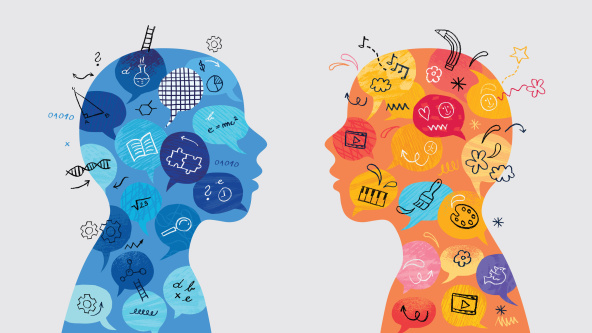
Do third culture kids make first class citizens?

What is a third culture kid?
How did the term 'third culture kid' originate?
A term coined in the 1950s by American sociologist Dr Ruth Hill Useem, ‘third culture kids’ (TCKs or 3CK) is a phrase that refers to people who spend or spent (including those now adults) a good part of their formative years in one or more ‘host’ countries (the second culture) which are neither their or their parents’ passport or ‘home’ country (the first culture). Invariably, these children end up living with a mishmash of references and experiences, creating a ‘third culture’.
Who counts as a third culture kid?
Children of expat workers – whether military, diplomats, teachers, NGO workers or, increasingly, digital (global) nomads – are obvious contenders for the title.
One well-travelled TCK told us of her well-rehearsed speech: ‘Well I have a British passport but I was born in India, did primary school in Sri Lanka, middle school in the Philippines and graduated in Thailand. So I’m not really sure where I’m from, but I feel more at home in a sari than a kilt!’ Her mum added, ‘This always made UN Day at school interesting!’
Benefits of being a third culture kid
The chance to travel, learn a language by immersion, experience different cultures and make friends with children from all over the world sounds intoxicating to many (though no doubt daunting to some). These are among the most commonly cited benefits of being a third culture kid.
Learning languages and adapting to different cultures
Third culture kids often grow up bilingual (or trilingual); flexible, adaptable and resilient; and insatiably curious about the world and the people in it.
Challenges of growing up as a third culture kid
The flip side can be not quite belonging in the host country but also floundering when visiting, or relocating to, your ‘home’ country (which is often assumed to be an easy ride). Not knowing the fashions, the slang or even the sweets (candy...case in point!) when you’re with your cousins of a similar age quickly marks you as an outsider. Reverse culture shock is a very real phenomenon.
Yet sometimes TCKs have an even stronger sense of patriotism. Think of all those home-flag-waving, national-costume-wearing opportunities that don’t necessarily happen on home soil.
Feeling disconnected from loved ones, especially grandparents, and missing important family get-togethers can be tough for these children, as well as their parents. Even if you have the time and means to travel home every year, relationships change.
Friendships, family and life between countries
Feeling disconnected from loved ones, especially grandparents, and missing important family get-togethers can be tough for these children, as well as their parents. Even if you have the time and means to travel home every year, relationships change.
Why third culture kids often form friendships quickly
Yet while it can be hard when distant friends or relatives struggle to relate to your very different life (with perhaps a touch of envy thrown in), the upside is that TCKs often develop remarkably strong self-sufficiency and the ability to forge meaningful connections wherever they go.
No wonder that expats often say their ‘friends become family’. Friendships tend to develop at breakneck speed, not just to replace lost familial links, but because you never know how long your new best friend in maths class (or football club) is going to stay.
That’s certainly the case in some international schools, where the turnover of kids can be 10 to 20 per cent a year. So TCKs, who often gravitate together due to their shared experiences, have to make new friends not just every time they move, but possibly several times in each place. Yet this has its upsides too, as they grow their global network and no longer see borders as boundaries.
Nothing lightens the heart more than hearing your children talk about friends who now live on another continent as if they were still in the next-door room.
And while we may bemoan our teens (over)use of social media and messaging apps, it’s never been easier for global friendships to continue; there are no language or travel barriers to playing EA Sports FC online!
Schooling options for third culture kids
Not every TCK attends a physical school, of course (though it’s a legal requirement in some countries such as Germany and Greece).
The rise of both homeschooling (including online schooling) and of parents being able to work from anywhere (not just from home) has led to a phenomenon of ‘world schooling’ or ‘unschooling’.
Families travel, sometimes in a large group with a permanent teacher, incorporating the culture, customs and languages of the countries they visit into experiential everyday learning. American world schoolers in Bali could be cooking nasi goreng one day and learning about Hinduism at a local temple the next – interspersed with geography lessons on tsunamis on the beach, with breaks for surfing and counting shells in Bahasa Indonesian thrown into the mix. Where do we sign up?
Online schooling and hybrid schools have revolutionised the landscape, with families able to tap into structured learning (with a choice of live classes or an asynchronous model of self-learning) wherever they are in the world and with greater emphasis on community and pastoral care than you could imagine. In fact, the growing number of world-class online and hybrid schools means families have more choices than ever on how and where their children can learn.
University choices for third culture kids
Graduating from what might be your second or third high school commonly leads to the next educational conundrum: which university to attend and where to study. After all, while in some countries, universities hand out domestic or home fee status to just about anyone possessing their passport, other nations are less generous – the prospect of studying at ‘home’ but at the cost of an international student is somewhat galling to most.
Home fees, international fees and residency rules
For example, to qualify for home fees in England, applicants generally need an eligible immigration status and to meet residency requirements, typically involving three years’ ordinary residence in the UK immediately before the course begins.
While there are exceptions (eg if you can prove you are overseas on a ‘temporary basis’ due to your parents’ work), every institution interprets the (non-published) rules differently, leading to agonising weeks waiting to find out if you can afford your dream course.
Studying abroad as a third culture kid
Many choose to forgo the angst and study at one of the many world-class institutions around the world that also teach in English, such as Bocconi University in Milan or the University of Amsterdam in the Netherlands. Though it’s wise to factor in the living costs, especially accommodation, as they can quickly eat into the price difference.
On the upside, university often leads to the chance to reconnect with friends from earlier days, be that in the lecture hall or on the sports field. While many say that university is an opportunity to make a broader group of friends, for TCKs it’s an opportunity for friends who moved away (or who you moved away from) to come back into your life.
And once launched into the world as a fully-fledged adult, that backdrop of living overseas and making friends of all nationalities and cultures serves you well in the workplace, though parents shouldn’t be surprised to find their (now grown-up) child seeking out those jobs that take them back into the ‘big wide world’! The apple never falls far from the tree and all that.
Are third culture kids better prepared for adult life?
There are many well-adjusted and open-minded TCKs speaking multiple languages and contributing meaningfully to society in whichever country they end up in. Barack Obama was a TCK (born in Hawaii to an American mother and Kenyan father, but lived with his mother and stepfather in Indonesia for four years and learned the language) and he hasn’t done too badly.
One young man with a Canadian passport, who graduated from an international high school in Cape Town, told us that when he’s in South Africa he tells people he’s Canadian but when he’s back in Toronto he says he’s from South Africa! When asked if it gets him down not to belong anywhere in particular, he said, ‘Yes a little, sometimes, but I wouldn’t change the life and experiences I’ve had for anything.’