Best schools in Sydney
Education in Sydney
Education in Australia is administered by the individual states – for Sydney, it’s NSW Education Standards Authority. The school year starts in January and finishes in December - there are four terms and three breaks of between two to three weeks. Children must have turned 5 years old by 31st July in the year they enrol. For late birthdays (May/June/July), it is becoming increasingly common to start in the following year, but children must have enrolled by the time they turn 6.
There are three types of schools: private, Catholic and government, although there is some overlap.
Because private schools are partially funded by the federal government, around a third of families go down this route. This group includes schools that are governed independently, as well as alternative schools such as Rudolf Steiner. But the most renowned are the ‘traditional’ schools with a religious background - Anglican, Catholic and Uniting Church.
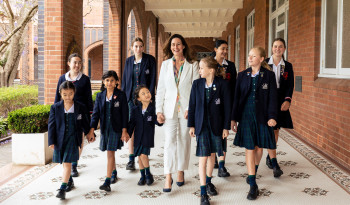
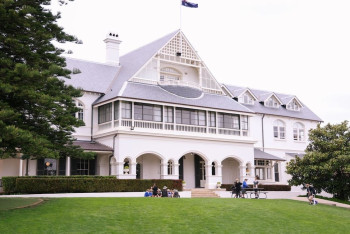
Most of the private schools, which consider themselves the backbone of Sydney, are over 80 years old and have a strong similarity with English public schools. They are popular with white-collar professionals and have excellent facilities and good reputations. The majority are single sex, although a few of the boys’ schools take girls in years 10-12. A number are selective. Private schools command a great deal of respect in the Sydney community. Demand for places is strong as the number of schools has grown little in the last 40 years – and with a few of the ultra-elite schools, it is prudent to enrol the child at the time of conception…not an exaggeration.
Around 20 per cent of families in Sydney opt for the Catholic sector, which is made up of two categories: the independent schools mentioned above and systemic schools administered by the Archdiocese. Systemic school fees are comparatively low. The majority of pupils are Catholic but most schools are not exclusive. There is a strong religious ethos and emphasis on pastoral care.
There are also government schools – the state system. In New South Wales, this consists of primary school (kindergarten to year 6) and high school (year 7 to year 12). Confusingly for British parents, primary schools are known as public schools. These schools have a reasonably good reputation and are basically free but there is no rating system, so word of mouth counts for everything. As Sydney has a population of over five million, people tend to go on what they have heard over the years. Good areas tend to have good local schools (and good local schools keep the property values up) as there are catchment areas for each school. If your first choice is not available, there will usually be another good one nearby – and you can even go outside your resident area (but locals/siblings etc get priority). The NSW government website www.education.nsw.gov.au provides a search engine (by area) for all the public schools.
Most schools have a strict uniform code. Sport – and especially competitive sport - is a further important feature of most Australian schools. Half a day is usually allocated, with a great range on offer both within and outside the curriculum. Outdoor education is another significant factor, especially in independent schools. Could be a couple of nights in cabins right through to an arduous week of bivouacking in the Australian bush – all are usually compulsory and feature the likes of canoeing, rock climbing, abseiling, mountain biking and bush skills.
Choosing a school in Sydney
The most common piece of advice given to families moving to Sydney is to find the school before looking for accommodation. And if you have a son, he takes priority - not (no need for feminist panic) because boys are better but because places for boys are considerably rarer than those for girls.
If you go down the government school route, note that some primary schools go up to 900 and some are as small as 100. School size can be an indicator of amenities and extracurricular activities offered but is no guarantee. Some schools have only a small paved play area whereas others will have a large green area and some also have swimming pools.
Some of the government high schools have an unfortunate reputation, where a perceived lack of discipline is seen to affect overall education. The exceptions are the state selective high schools, which have an enviable academic record – but they only enrol the top four to five per cent of students, who apply to the internal school selection committee.
As for selective private schools, bear in mind that the strict requirement of permanent Australian residency often discounts them as a feasible choice. But for those making their permanent home in Sydney – and whose children are highly motivated and strive for academic success - the option is a great one.
At present, the only mandatory HSC (High School Certificate) course is English but there is an long list of elective courses including agriculture, visual arts, maths, languages and technology, to name a few. Students can also take VET (Vocational Education and Training) courses including accounting, hairdressing and tourism.
Bearing in mind that the seasons are reversed, the disparity in school calendars is probably the biggest obstacle for children returning to schools in the northern hemisphere. But the differences in curriculum are not major hurdles and any differences are usually overcome by short periods of extra coaching. Students have a broad subject choice until year 11, and thus are well prepared for both HSC and A levels – and students can also still gain admission to UK universities.