Best schools in Ho Chi Minh City
Education in Ho Chi Minh City
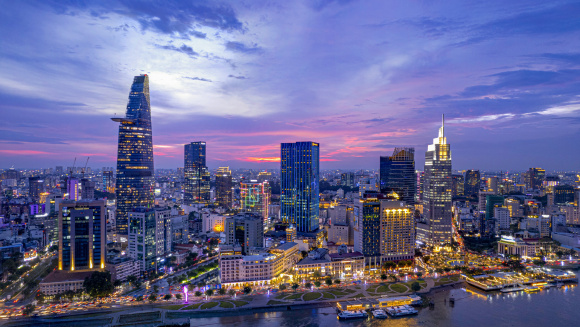
Ho Chi Minh City (HCMC, or Saigon as it’s still widely known) has a school scene that’s young but expanding fast. Even the oldest international schools are only around thirty years old, far newer than the long-established heritage schools in other Asian hubs. With new campuses opening regularly, education is one of the city’s fastest-growing industries. Parents should, however, be aware that standards vary. Some families even draw a line between what they call ‘real’ and ‘fake’ international schools, so doing your research is essential.
Expat families rarely consider the local public school system unless their child is fluent in Vietnamese. Public (local) schools here are highly traditional, with large class sizes of up to fifty students, a strong focus on rote learning and strict expectations.
The international schools, however, offer excellent alternatives, many with incredible academic outcomes including IB results that way surpass the global averages and graduates heading off to Ivy League and Oxbridge universities.
International consultancy
If you’re considering a move abroad, our expert consultants can advise on all aspects of international education, from curricula to the local parent scenes.
Choosing a school in Ho Chi Minh City
Choosing an international school in Ho Chi Minh City usually depends on where you decide to live. The city has finally rolled out its long-awaited Metro line 1, which runs from District 9, through District 2 and into District 1. With more lines promised sometime this century, public transportation, while improving, cannot compare to the convenience of other Asian hubs like Bangkok and Singapore.
Most families give up on the idea of driving themselves after one look at Saigon’s chaotic streets. The easier and surprisingly affordable options are to hire a family driver or use ride-hailing services. Many families, though, take advantage of the school bus services that connect many districts.
District 2, especially Thao Dien, is home to many of the city’s best-known schools, including BIS HCMC, EIS (European International School), and AIS (Australian International School). District 7 is another family-friendly hub, where many choose the not-for-profit SSIS (Saigon South International School) or Renaissance International School. Both areas offer a comfortable lifestyle with international dining, shopping and plenty of family-friendly entertainment from parks to cafes.
Districts 1 and 3 may be central and convenient for work, but you’ll struggle to find reputable schools there. That usually means a commute for you or your child is part of the package if you’re tied to the city centre.
Curriculum
Curriculum is another important consideration, not least to ensure that your children can transition easily. Many schools offer the International Baccalaureate Diploma Programme (IBDP) either as a full IB school or as part of a mixed model with British pathways (English national curriculum and IGCSEs) or American pathways (with AP courses). A levels are also on offer for families who prefer a full British curriculum and there are other distinctive alternatives if you’re looking for something more specialised, for example, the International German School (IGS) with the German curriculum, the Vietnam–Finland School (VFS) with the Finnish model, and Lycée Français Marguerite Duras for French families, all with some level of English.
Classroom
With Vietnam’s fast-growing economy and rising wealth, it’s no surprise that more local families are investing in international education. Many schools now have a wide mix of nationalities, some citing as many as 60, but the largest groups are usually Vietnamese and South Korean. To keep classrooms culturally varied, most schools cap the numbers from any one nationality. It’s a good idea to ask about this during your visit if diversity is something that matters to you.
Accreditation
As in Hanoi, the Vietnam war meant the influx of international schools only began around 25 years ago. All the ones we review are externally accredited, either by independent American agencies or the Council of International Schools (CIS) or inspected by accreditation agencies for the British Schools Overseas (BSO). Some are even dually accredited. Watch out for the similarity of school names, particularly the use of the word American (which may account for many schools being more commonly known by their initials).
Although most international schools are open to registering students all year round, the most popular ones tend to have waiting lists so you need to get your act together fast and research the schools as soon as you know you’re heading for HCMC. Not all are fully selective but given the highly impressive graduate scores and destinations and the pushy local parents, these schools can tend to be full-on academic hothouses.
Special education needs in Ho Chi Minh City
Most international schools here can cater to mild to moderate special needs and also have specific programmes (at additional cost) for children for whom English is not their first language. For a more specialised SEN offering, parents can consider STEPS school for its highly individualised teaching for children with autism, developmental delays, ADHD, hearing impairments and more. Class sizes are capped at around three students with two teachers and programmes are tailored around life skills, therapy and play based learning.
Pre-schools, kindergarten and nurseries in Ho Chi Minh
Some of the best international schools such as BIS HCMC offer a pre-school to prepare students for full-time education. Bus services are provided for most schools, even at pre-school level and these are generally to Western standards.
In addition, there are a number of nursery schools and kindergartens that offer more affordable alternatives. Families can consider the nature-focused Reggio Emilia-inspired Aurora International School of the Arts and Eton House or Montessori schools.