
Boarding prep schools: what you need to know

Boarding at prep school – will it suit my child?
Like most prep schools, it all starts in year 3 and typically continues up to year 8 before pupils move on to senior boarding schools starting in year 9. ‘Proper’ boarding most likely begins at around age 11, although flexi boarding or an occasional ‘taster’ night provides a great introduction.
There are, of course, some prep schools that admit boarders under the age of 10 – the more traditional boarding preps still anticipate boarders starting in years 3 or 4. These schools aim to get bedrooms looking closer to how things are at home, and the regime and timetables can be a little more flexible.
While there are still some children who ‘have’ to board (those whose families live abroad, for instance), these days most are likely to have had a say in the decision. Indeed, children often have to persuade their parents to let them board – rather than the other way around.
If your child is aiming to apply to a senior boarding school, it makes sense for them to try out boarding beforehand at prep school. Not only will this provide a useful grounding in the social and organisational skills that boarding demands, it will also be a good test of whether living and studying away from home is right for them. A certain amount of homesickness is to be expected at first, but it’s usually very short-lived, and house parents and other staff are adept at managing it. However, no school will want to have a child boarding if he or she is permanently and fundamentally unhappy with the arrangement.
Boarding just for fun
Prep school boarding isn’t just for children who intend to board at senior school. The experience can be enjoyable in its own right, with out-of-hours access to facilities such as the swimming pool, and more time to spend on hobbies and interests instead of in the car on the school run. For families who live in cities, a country prep with acres of grounds, clean air, and endless outdoor pursuits is a particularly attractive alternative to a urban environment with limited space.
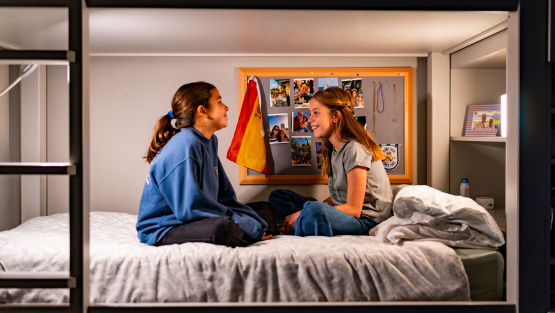
Full, weekly or flexi boarding?
Just a few prep schools still offer ‘full’ boarding (seven days a week with only a few non-school weekends) and even those that do encourage parents to come and see their children in plays and concerts or sports matches. The rest provide a mix of weekly, flexi and occasional boarding designed to fit in with modern family life (as well as ensuring that dormitories stay full). However varied the boarding options, most schools expect parents to commit to a certain number of nights’ boarding in advance at the start of the term, although they will do their best to accommodate a child if, for instance, there is a family emergency.
While schools tend to discourage the ‘it’s like a sleepover with your best friends’ narrative, this is essentially how part-time or flexi boarders regard the two or three nights a week they stay over. Parents too may relish a few days without nagging over music practice and homework or marshalling children plus all their kit into cars or buses.
What are the benefits of a boarding prep school?
Boarding teaches children to take responsibility for their possessions, organise themselves for the day ahead, and get along with others, whether they are friends or not.
Another significant aspect of boarding, admittedly more popular with parents than their offspring, is that pupils’ access to mobile technology and screens of all kinds is very restricted. Policies vary: some schools only allow reading devices such as Kindles, while others may let older pupils use phones or iPads for an hour or two after homework (with supervision). Conversely, modern technology also makes it easier for families to stay in contact via email, video calls, or phone. Many preps have kept landlines so that pupils can call home without recourse to mobiles. It’s up to parents to decide which regime is most suitable for their child.
If it suits the family and the child, boarding at prep school can be a very positive experience, building confidence and social skills and, perhaps, allowing children a little extra time to mature at their own pace before starting senior school.