Choir schools explained
What is a choir school?
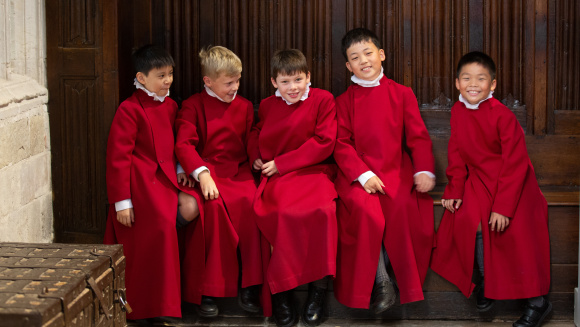
For musically-inclined children, and particularly those with a passion for singing, a choir school can provide an education immersed deeply in music. All the academic subjects, activities, sport and pastoral care expected of a normal school are wholeheartedly embraced, but there is an extra dimension because of the closeness to the church, the emphasis on music and the additional duties of the choristers.
The choristers, in fact, are usually a minority of pupils but the presence of a professional choir and the ancient religious foundations means that these schools are unique and provide an unusual educational experience for all children. The former head of St George’s School Windsor Castle told us on a recent visit that ‘the discipline and attitude of the choristers sets the tone for the whole school’. It’s a sentiment that is reflected at choir schools across the United Kingdom, not just with regard to musicality but in the energetic and thoughtful approach to learning.
There are around 50 choir schools in the UK, the vast majority are private schools. A small number are state-funded, including Bristol Cathedral Choir School, The London Oratory, Runnymede St Edward’s Catholic Primary/St Edward’s College in Liverpool, The King’s School in Peterborough, and The Minster School in Nottingham.
As most choristers are aged between 8 and 13, they tend to be prep schools or schools which incorporate junior and senior departments.
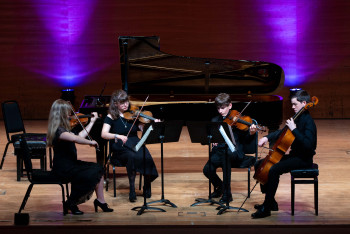
Non-choristers at choir schools (with the exception of those at Chetham’s School of Music) don’t need a musical bone in their body but the culture is enough to tempt most to test their vocal cords or try their hand at an instrument. Our review of The Pilgrims’ School notes, in addition to the two professional choirs, the school hosts ‘pre-prep, junior, senior and chamber choirs, as well as orchestra, big band and sinfonietta,’ with 90 per cent of pupils learning at least one instrument.
Choristers’ days are usually longer because of rehearsals and services (some choirs sing up to eight services a week); boarding is often a prerequisite. Additionally, schools that are home to choirs with big commitments around Christmas or Easter stay open right up to Easter Day and Christmas Day to allow for the choir’s role in the religious festivals. Choristers at Christ Church Cathedral School told us that Christmas was ‘loads of fun and games,’ and that football socks are hung up on Christmas Eve to be filled by the matrons.
Being a chorister is hard work. In addition to their ecclesiastical duties, choristers are often expected to learn two musical instruments and play an active role in the musical life of the school.
They leave choir school as accomplished musicians, many going on to win choral or music scholarships at senior school and university. Not surprisingly, former choristers are well-represented in the world of professional music.
Do choristers get paid?
Choristers’ reward for their day-to-day work and singing to a professional standard is a reduction in school fees: a choral scholarship. Any work they do outside their routine church services such as concerts, weddings and tours may also come with a pay cheque. This money can grow to form a nice little nest egg for a retiring chorister (aged 13) but is unlikely to stretch to more than the latest games console or a tablet.
Choral scholarships and bursaries
Choral scholarships at a choir school are usually worth 20 to 50 per cent of the school fees. Scholarships or bursaries worth this kind of money at UK prep schools are a rarity so these are among the most valuable scholarships available. It may also be possible for a child to be awarded further bursaries from the school or from external sources. The Choir Schools’ Association administers the government’s Choir Schools Scholarship Scheme and also provides its own means-tested bursaries. The purpose of these is to allow children whose families are unable to afford the remaining costs to still take up a choristership.
They leave choir school accomplished musicians with many going on to win choral and music scholarships at senior school and university.
For the handful of state-funded choir schools, in the absence of any school fees (and therefore the need for fee assistance), the costs of instrument lessons and voice coaching might be covered. Some also pay the choristers a small but well-appreciated termly cash bonus.
How to become a chorister
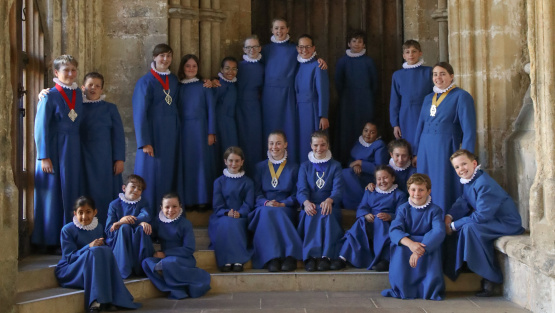
All wannabe choristers will take part in a voice trial – the assessment of their musical and singing potential. It works alongside any other admissions requirements the school may have. Usually aged between 7 and 9, applicants are expected to demonstrate an enjoyment of singing, a musical ear, and the capacity to develop into an accomplished chorister. Those deemed to show ability, musicality, and attitude at the audition will be invited to become probationers. The probation period can last between 6 months and 2 years and is designed to allow young choristers a chance to progress, mature, and become familiar with the repertoire.
Why do choir schools exist?
Although nearly all choir schools also educate children who aren’t choristers (Westminster Abbey Choir School is the exception), the choristers are usually the original reason for the establishment of the school. The reason lies in the close relationship between choral music and Christian worship in the United Kingdom – the so-called ‘English Choral Tradition’ – which stretches back more than a thousand years. In medieval times, services were conducted in simple chants. Boys whose voices were yet to break would take the high notes, monks the low ones. Today, the adult singers are professionals (or distinguished students, in the case of Oxbridge college chapels) and the child singers – boys and girls – are highly trained musicians tackling a demanding repertoire spanning five centuries or more.
Choirboy, choirgirl, chorister or treble?
In the English Choral Tradition, both ‘choirboy’ and ‘chorister’ tend to refer to a boy who sings in a choir. The word ‘chorister’ carries the implication of both a church setting and a high standard of singing but, as for centuries choristers were always boys, the words were used interchangeably. However, with increasing numbers of girls now featuring in choirs, ‘choirboy’ is used less and the catch-all term ‘chorister’ is more common. ‘Girl chorister’ or ‘boy chorister’ sometimes provides further clarification; choirgirl is also occasionally used. Additionally, choristers are sometimes referred to as ‘trebles’ as they sing the treble (or soprano) line.
Among British choir schools the classic, exclusively boys’ choirs still exist but the trend is towards change, and many schools and places of worship are now also home to girl choristers. In these places, girls’ choirs often share the choral service duties, but choirs which mix boys and girls are becoming the norm and can even be found in settings as traditional as St George’s School Windsor Castle and St Paul’s Cathedral.
Famous former choristers
Many household names have spent part of their formative years as choristers in a cathedral choir school.
David Lammy, MP for Tottenham and Deputy Prime Minister, sang at Peterborough Cathedral as a pupil at The King’s School
Alexander Armstrong, broadcaster and comedian, at Durham Cathedral as a pupil at Durham Chorister School
Simon Russell Beale, actor, at St Paul’s Cathedral
Alastair Cook, former England cricket captain, at St Paul’s Cathedral
Jon Snow, broadcaster and journalist, at Winchester Cathedral as a pupil at The Pilgrims’ School
Roger Taylor, drummer for the band Queen, at Truro Cathedral as a pupil of Truro School
Howard Goodall, composer and broadcaster, at New College School, Oxford.