Living in Brasilia: an expat guide
What to expect when moving to Brasilia
The capital city of Brazil was moved from Rio de Janeiro to Brasilia in 1960. This idea germinated in colonial times when early Portuguese settlers were looking for a safe inland capital away from the poor climate and the inconvenience of frequent military invasions along the coast.
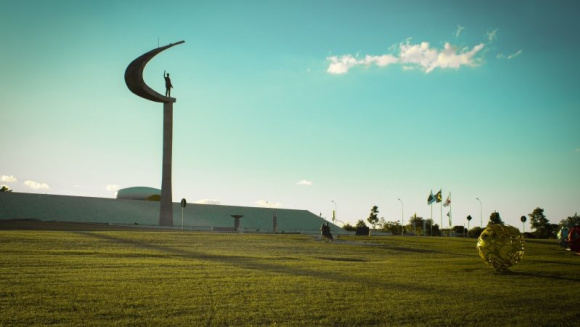
Nothing came of these plans however until 1955, when Presidential candidate Juscelino Kubitschek promised that, if elected, he would build the new capital within his five-year term of office. Kubitschek was elected, and to the surprise of virtually everyone, he succeeded in keeping his promise and the new capital was inaugurated less than four years later, on 21 April 1960.
These days Brasilia is arguably one of, if not the most, successful manmade cities in the world. Originally planned for 500,000 inhabitants, Brasilia has seen its population grow much more than expected and several ‘satellite’ (now called administrative) towns have grown up around the outskirts. Today, Brasilia’s total population, including the administrative towns, is nearly 5 million.
The abraco
The abraco, or embrace, is the national form of greeting in Brazil. It is not unusual for two male friends to speak in the street with arms about each other’s shoulders. Women give each other kisses on both cheeks, always on the right cheek first. However, it is always safe to shake hands if you do not feel comfortable initiating um abraco.
What is the climate like?
The climate is good, although rather dry in the winter (June - October) and temperatures average mid-20s year-round. Fair-skinned people, especially, should take precautions against the sun which, at this latitude, is very strong.
Is it safe to live in Brasilia?
Safety in Brasilia is more guaranteed than in most other parts of Brazil. The extreme poverty which exists side by side with wealth in larger cities such as Sao Paulo or Rio is still marginalised to the outskirts of Brasilia and not evident in daily life. The most common form of crime is theft from homes or theft of cars. Usually, there is little personal danger in these circumstances. A phenomenon known as ‘quicknapping’ is unfortunately becoming more common. This involves the criminal(s) getting into your car with you (often when you are returning to your vehicle in a car park) and forcing you to drive to various cash points to withdraw money on your card. Again, the victim is rarely physically hurt.
Is Brazil a religious country?
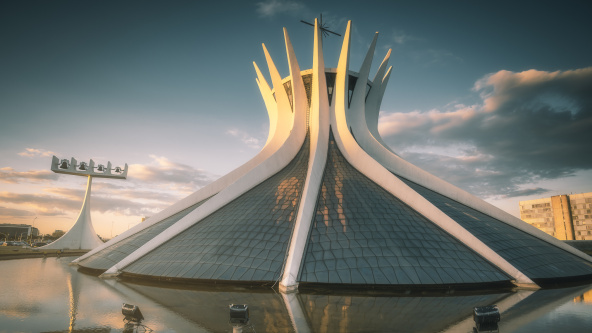
Brazil is a predominantly Catholic country but tolerant of all religions. Brasilia in particular, is home to several religious cults and there is a distinct New Age feel to certain parts of the city. The most visited place in Brasilia is the ‘Temple of Good Faith’, constructed in the form of a seven-sided pyramid, which has a 21kg crystal at the apex of the main hall. The temple invites people of all religions to follow a spiral route under the crystal in search of energy through prayer and meditation.
Where to live in Brasilia
The layout of Brasilia is hard to comprehend when you first arrive. The city has been designed in the shape of an aeroplane (known in Portuguese as the Plano Piloto), with residential sectors along the north and south facing ‘wings’, and ministerial buildings, hotel, and banking sectors, etc, along the main body, or ‘fuselage’.
A manmade lake (the Paranoa) runs alongside the east side of the Plano, providing a focal point for the city. The objective of the lake was to increase humidity and make the dry climate of the region more tolerable, but it has also developed into an excellent location for water sports, and many private clubs and some restaurants are located along the lakeshore. More residential areas (offering bigger, family houses) exist around the lake to the north and south.
These days Brasilia is arguably one of, if not the most, successful manmade cities in the world.
The south wing is older and more developed than the north, and most expats who choose the apartment option live on this side of town. All apartment buildings look pretty similar from the outside – modern, concrete structures – but inside, flats are spacious and light. Many apartment buildings also have a shared ‘cobertura’ (rooftop) area, usually with sun loungers, plants, etc, and occasionally with swimming pools.
Many international families live in the South Lake area. This area is made up of family houses, usually large, often with nice gardens and swimming pools. Organisations usually arrange accommodation on behalf of their employees moving to Brasilia and either have properties of their own or contacts of reputable landlords with accommodation that meets expat standards. Estate agencies do not seem to exist in the city, but accommodation is regularly advertised in local newspapers and just by asking around you can usually get details of reliable landlords.
What are the superquadras?
Each wing is divided up into superquadras, which in turn have residential and commercial sectors. A typical superquadra might have, say, about 20 apartment buildings and a main road which features a small supermarket, hairdressers, pharmacy, picture-framing shop, dry cleaners, and several bars and restaurants. Plenty of trees and grassy areas split up the residential and commercial sectors.
The idea of the superquadras was that they would each contain small communities, but unfortunately, this hasn’t been entirely successful. Many have gained a ‘specialist’ reputation – for example, one quadra has all the dress-hire shops, another is renowned for its photographers or hairdressers, etc.
Getting started in Brasilia
One of the first things you should do on arrival in Brasilia is to apply for your CPF (individual registration number). All residents of Brazil must have a CPF number and it is virtually impossible to get anything done without one. Your CPF will be needed before you can open a bank account or make any significant purchases. Most organisations will complete the procedure on your behalf.
It involves applying for the registration at Banco do Brasil and then waiting for the number to be issued by the Ministry of Finance (taking approximately 10 days) or alternatively, queuing up at the Ministry yourself for several hours in order to get it more quickly. Make sure you take along a copy of your birth certificate as well as your passport. In a country obsessed by names, you need to have proof of both your mother's and father's full names, as well as your own.
Finding home help
Many people have maids to help them at home, and their duties commonly include shopping and cooking, as well as cleaning, ironing, and looking after children. Maids are often passed down by predecessors or recommended by word of mouth. Due to the rather extreme differences of wealth in Brazil, even most middle-class locals will have at least one maid and often a separate nanny as well as gardeners, drivers, etc. Most accommodation has maids’ quarters. If you do decide to employ a maid for three days or more per week, then you will need to have a proper contract and pay insurance and pension contributions as well as a 13th-month salary (bonus). For home repairs, it’s recommended to ask around for a reputable builder or handyman. Appointments made with companies can’t always be relied upon. You should call to reconfirm at least twice and be very careful letting people into your home unsupervised.
Health and hygiene
As for health and hygiene, Brasilia rates quite highly. Restaurants have a good standard of cleanliness. Traffic flows quite freely along the Plano Piloto and therefore there is very little air pollution. Unlike some other parts of Brazil, there is no malaria, although be on the watch for dengue fever. Hantavirus, which is a deadly condition spread by rats, is more of a danger in the countryside but has occasionally been known to occur in cities.
Buying a car
Although the drivers here are reputedly the best in the country and speed limits (often 60 km/hour even in four-lane traffic) are strictly adhered to, accidents (involving cyclists and motorcyclists especially) are frequent. Many vehicles in Brazil would never pass British MOT requirements and the fairly constant noise from tired engines and screeching brakes, although annoying at first, soon becomes part of daily life.
Many car dealerships and garages are situated close together on the outskirts of the Plano Piloto. It is worth making a trip in the early stages of your arrival – having a look around and taking a couple of test drives. Some dealerships will give you a competitive price on a hire car while you are waiting for your own to be delivered. If this is not the case, the airport and its environs seem to be the best place to negotiate a good deal.
Second-hand cars sold in Brazilian garages may well be ‘clocked’ (meaningsomehow ‘tampered with’ so that it looks like you are getting a better deal than you actually are) if you aren’t buying from a reputable dealer (and it’s hard to be sure). However, due to the large expat population of Brasilia, you can often find details of returning expats who want to sell their cars.
Day-to-day living in Brasilia
Brasilia is very spread out and it takes longer than you think to get to most places. While you are driving around, you will realise that there is no real centre to the city. The fuselage may be the geographical centre, but it is made up primarily of ministry buildings, banks, and hotels. The usual ‘downtown’ area of shops, cafes, restaurants, and museums does not exist here: these places are dotted around the city in the different superquadras. Walking is restricted to a few pedestrian-friendly areas, including the large city park, a small area around the lake, and within the superquadras.
Buses and public transport
Buses are frequent and cover the whole of the Plano Piloto as well as satellite towns, although nearly all of them go via the central bus terminal which is not considered to be a very safe place. Brasilia also has a metro system, which is clean, comfortable, and cheap, but only makes a couple of stops along the south wing and serves mostly as a link for people living in the satellite cities to get into work in the centre of town.
Having your own car will make life easier in Brasilia. Although you could probably manage without one (especially living in one of the more popular superquadras of the south wing), it will make a huge difference to the quality of your life. The city was not designed with much thought for pedestrians and this means that it is almost impossible to walk anywhere without regularly having to cross over a three-to-five-lane highway. Pedestrian crossings are respected but are few and far between.
Shopping
Malls are popular in Brazil and this is where the locals go to promenade. Brazilians love to dress up and part of the attraction of hanging around the shopping mall is to look good. There are occasional markets at weekends near the lake and at the TV tower, however, don’t expect great ‘ethnic’ produce. The markets usually sell handmade crafts, etc, but these are not of outstanding quality. The best market is the wholesale fruit and vegetable market behind Carrefour hypermarket. Go early (at dawn!) on a Saturday morning for the most amazing selection of fruit and veg, or on a Thursday for fresh flowers.
Supermarkets seem to be rather sporadic in what they sell and it is not uncommon to have to go to two or three different shops before you find everything that you want. Small supermarkets within the quadrants sell all the basics but you often have to go to delis to find more luxury, imported goods. Apart from that, most things are available, including a fantastic selection of fresh vegetables and exotic fruit which would cost a fortune back home!
Nightlife
If you’re looking for a vibrant nightlife then you won’t be disappointed. The Federal District is one of the richest states in Brazil, and Brasilia has excellent bars, cafes, and restaurants catering to wealthy expats and politicians.
At night, the Brazilians eat late and stay out later. If you arrive at a restaurant before 9 pm be prepared to be the only ones eating. At events such as weddings and important birthdays the later the meal the more sophisticated the evening. Invitations will specify dress codes and Brazilians, particularly women, love to dress up. If you are invited out, expect the locals to arrive a good half-hour to an hour later than the agreed time. If you are hosting an informal party yourself, don’t be surprised when people don’t turn up who promised they would and others unexpectedly bring along friends and family that you’ve never met before.
Meeting new people
Brasilia is not a particularly easy place to meet locals. Like the foreigners, many of them come to the capital to work for a couple of years and then return to their home cities in other parts of Brazil.
The easiest way to meet Brazilians is in the workplace, or through a social activity such as football, dancing lessons or cooking courses. Or perhaps at the gym – Brazilians (both men and women) are very body-conscious and will spend a lot of time working out at the gym. There’s a thriving expat community where it’s easy to meet foreign nationals.
Playing sport
Brasilia’s many leisure facilities and good year-round quota of sunshine ensure plenty of outdoor activity. Private clubs are expensive but offer water sports, swimming pools, football and tennis courts, and exclusive restaurants. Tennis is widely played and finding a court to hire is easy. There is also a golf course in a beautiful setting by the lake. Water sports including sailing, rowing, and waterskiing are all very popular. Barbecues by the pool are common at weekends. It is easy to lead a life of sunshine and leisure: shopping malls, coffee mornings, bridge clubs, language lessons, tennis, and the gym will quickly fill your days. However, many spouses are frustrated at the lack of job opportunities for non-fluent Portuguese speakers.
Visiting other areas of Brazil
Brasilia offers great travel opportunities within the rest of Brazil. Flights to Sao Paulo and Rio de Janeiro are frequent and only take an hour and 20 minutes, making both cities accessible for the occasional weekend. The historic colonial towns of Minas Gerais, breathtaking waterfalls of Iguacu, or fabulous coastlines of the Northeast are also within reach for a long weekend. No train network and dangerous, poorly maintained Brazilian roads mean that air travel quickly becomes the norm. Planes operate like buses and often stop at one or two other cities on the way to your final destination.
The last word
Despite the futuristic, concrete, and often impersonal feel to this city, Brasilia is nevertheless the capital of a country that is one of the most vibrant, fun-loving, culturally rich and naturally beautiful in the world. Living in Brasilia will give you the chance to explore this wonderful country and get to know its amazing people and customs. Whether you choose to attend the Rio Carnaval, explore the Amazon rainforest, or play football with the locals on one of the hundreds of white sandy beaches, Brazil is an amazing place. Enjoy the experience for all that it’s worth.