Living in Tokyo: an expat guide
What to expect when moving to Tokyo
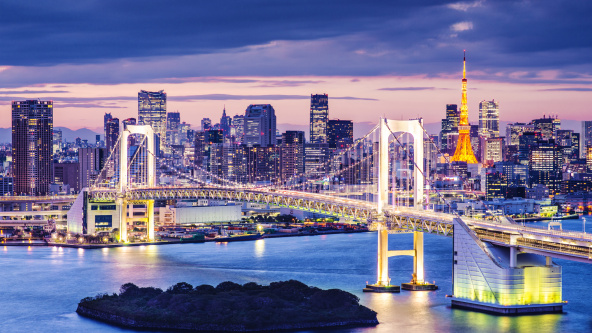
Tokyo is a bit like unfurling a flower — just take it layer by layer and enjoy each stage. On a bad day, when it all feels so foreign (the movie ‘Lost in Translation' is still relevant over 20 years later!) and it just isn't a big adventure any more, find comfort and shelter in the fact that, within the world's second biggest city, you will quickly find one of the friendliest international 'villages' anywhere.
Accept the fact that, however organised you normally are, you will blunder about and make mistakes at the beginning but before long life will become easier. In the meantime, your confusion will be greeted with a degree of consideration, patience, and kindness that you won't find in any other country.
Where to live in Tokyo
Tokyo is a huge city with over 40 million people; deciding where to live can feel quite daunting but there are some very distinct districts to consider.
Ever since the Kobe earthquake in the 1980s, building regulations have been very strict (it is worth asking if a building is 'post-Kobe' when house hunting). The result is a city of fairly low-rise buildings compared to other Asian cities. In fact, Tokyo can seem to sprawl for miles in every direction with few clear landmarks to differentiate one area from the next.
Living near Minato
Minato-ku ward in South Tokyo is where you'll find most embassies and multinationals and is where many expats are first drawn because of the convenience of living near to work. It helps that many of the international schools also offer bus services to and from Minato.
Living near a park
If you are looking for more greenery, you may want to head to Setagaya-ku. Despite being one of the most populated parts of Japan, it is very popular with families because it has so many outdoor parks and waterways. But it is pricey and you'll need to fight your way onto the commuter train into the centre of town each morning.
Other areas
Other popular areas include Meguro-ku, Yanesen (comprising three neighbourhoods: Yanaka, Nezu and Sendagi), and Shibuya-ku (famed for the crazy Shibuya crossing), or some families head out to the West or the East of Tokyo (Kasai) for a more authentically Japanese-feeling living experience.
Getting started in Tokyo
Opening a bank account
To open a bank account in Japan, you’ll need to have a residence card (zairyu card). Only foreign residents with long-term visas (over six months) and those who have resided for longer than six months in Japan can apply. Credit cards are widely accepted in shops, restaurants, and hotels but cash is still a popular payment method so you’ll want to be in the habit of always having some cash on you.
Finding home help
Many families hire domestic workers who are predominantly Filipina and speak good English. They must be 'sponsored' by their official employer but are usually available for extra work on a 'freelance' basis. Rates are set at Western prices and if you wish to sponsor a full-time housekeeper or nanny it is best to go through your company or an agency as it is quite an involved process.
Healthcare and doctors
Popular amongst expats is the Tokyo Medical and Surgical Clinic where you’ll find good English-speaking doctors and a good range of specialists. Tokyo has one of the lowest rates of infant mortality in the world and any criticisms from new mums tend to be about 'over-fussiness' rather than anything more sinister. There are also American-trained, English-speaking dentists for adults and children.
Japan is prone to quakes and tremors, so it is also advisable to have a basic earthquake kit to hand containing water, money, blankets, etc (suggested contents are widely available, as are ready-prepared kits).
Day-to-day living in Tokyo
Getting around
It is incredibly easy to get lost in the many quaint but fairly identical-looking side streets, as while you will see familiar logos all around — McDonalds, Nike, Apple stores, the 'P' sign for a car park etc — everything else is in Japanese. It is a good idea to phonetically write out your address to help when hiring a taxi or asking for directions. Drivers are well advised to invest in an English satellite navigation system.
Tokyo is a bit like unfurling a flower — just take it layer by layer and enjoy each stage.
Luckily the metro is excellent — clean, efficient and, best of all, easy to understand and inexpensive. Bicycling is also a wonderful way to get around and explore, especially with children.
Shopping
A quick trip around a Japanese supermarket or ‘combini’ (convenience store) will introduce you to many convenient products, some but not all, at lower prices. This is one country where local does not necessarily mean cheaper, the Japanese are sticklers for premium products.
Don't panic too much about not being able to read every label — sell-by dates tend to be rigorously adhered to, quality is a matter of pride and Japanese people don't go in for artificial additives in a big way.
Meeting new people
It is very easy to get to know a large number of people, as they tend to go out of their way to be friendly and helpful. You could easily spend your entire time with foreigners, shop at international supermarkets (with valet parking and white-gloved delivery people) and never speak a word of Japanese if you so wish — while Japanese is a difficult language to master, learning a few day-to-day phrases will be very well received.
There are several clubs such as the Tokyo American Club with many international members and a huge range of courses, activities, and excursions on offer as well as welcome sessions for newcomers. Another useful feature of these clubs is their noticeboards — before you rush off and buy everything for your new home, have a look at the adverts online. Many people sell off whole house contents at low prices, some pretty new, as Tokyo is a very transient place.
The last word
Within a short time of living in Tokyo the strangest things will start to seem homely and familiar. Those initial clouds of confusion will begin to disperse and once this begins to happen it is hard not to fall in love with this amazing city that is so unlike any other.