Home schooling in the UK
What is home schooling?
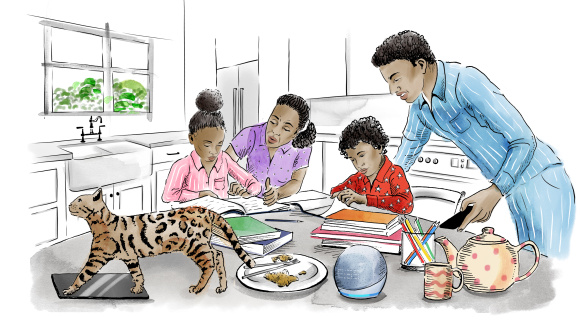
While the stereotype of home schooling is that of a parent assuming the mantles of myriad teachers (with the help of a whiteboard mounted on the kitchen wall) the reality can be much more varied, dynamic and sociable.
No wonder numbers are growing – with an estimated 126,000 children now home educated in the UK, according to the Department for Education.
Is home schooling legal in the UK?
Happily for these families, the public profile of home education has come a long way since being viewed as a bit weird (at best) and deviant (at worst) – although even now, it remains illegal in some countries such as Germany.
Yes, some children who have been removed from school under the guise of home education go on to be educated in illegal and unregistered schools (something that Ofsted is tackling) or end up neglected, or worse. However, the vast majority of home educators provide customised, active, efficient education at the child’s pace – often with huge success.
Why home school your child?
Some parents are home educators through choice; others have it thrust upon them.
The Good Schools Guide Education Consultants regularly hear from families who opt for home schooling because they feel the emphasis on targets and formal learning in schools makes learning a negative, stressful experience.
Others home educate while waiting for a place at their preferred school, including those who would rather opt out altogether than accept the place they’ve been offered. There are also families with children whose needs aren’t being adequately supported in school, including children who have become too anxious to attend and/or those with special educational needs.
Home schooling for gifted children and performers
Parents of gifted children sometimes opt for home schooling, either because their child finds school stressful or unchallenging, or because they just need more hours of, say, music, drama, or sports practice than can be comfortably accommodated in a conventional school day.
Online schooling and tutor-led home education
There has been a raft of children who have taken to home schooling since the Covid-19 pandemic. In fact, online schooling has really taken off since that period.
The Good Schools Guide now reviews 13 online schools, some offering a structured timetable of live lessons, others offering asynchronous options that parents can teach themselves or students can study independently (and some offer both).
There has been a rise in tutor companies offering home schooling programmes too. Home schooling is a growth area for Headway Tutors, for example – popular with international families, elite sportspeople and those with EBSA (emotionally based school avoidance). For these clients, the company creates bespoke timetables and ensures a good mix of subjects and teaching styles. One family told us Headway ‘went above and beyond to meet my child’s complex needs and managed to find suitable tutors for each subject, all experts in their field’.
Having an Education, Health and Care Plan is no bar to home educating, although the rules are different if the child currently attends a special school. Both the Ed Yourself guide to home educating with an EHCP and HE Special Needs are good sources of information on this specialist area.
Home schooling: the pros and cons
What are the advantages of home schooling?
It’s liberating. Freed from the constraints of state-imposed curricula, home schooling gives you the freedom to educate your child as you wish. The government leaves it completely up to parents as to how, when, where, and what they teach – as long as you ensure your child receives full-time education suitable for their age, ability and aptitudes. If particular subjects don’t appeal (and that includes the core areas of maths and English) you can leave them out altogether or come back to them later.
Anywhere can become a classroom. Opportunities for learning never stop. Museums and libraries make excellent ad hoc classrooms – but so do supermarkets and garden centres. A child can learn about geology at the seaside, chemistry in the kitchen, and biology at a wildlife centre. Many children also learn online from the comfort of their own bedroom.
Children are involved in their own learning. There’s even a movement – ‘unschooling’ – that formalises the process, letting children take the lead in their own education with the support of parents. It sounds like a recipe for non-stop time-wasting but that’s not necessarily the case. Many (now adult) unschooled children have gone on to higher education. And as to later life success, look no further than newspaper columnist and best-selling novelist Caitlin Moran.
The parent doesn’t have to be the teacher. The rise in online schools and tutor-led home schooling means that the full curriculum can be delivered by trained teachers away from an actual school. Some online schools, such as Net School, enable you to dip in and out of certain subjects, while others, such as Minerva’s Virtual Academy, deliver the kind of structured day that a physical school would – complete with live lessons, assemblies, extracurriculars, etc. The International British Online School and Nisai Virtual Academy are even based in their own physical schools, with teachers running lessons from actual classrooms and meeting in the staffroom.
What are the disadvantages of home schooling?
Applying for next steps can present hurdles. Home schoolers should not be at a disadvantage when applying to university or the workplace – in fact, many institutions now view home education favourably due to the independence and self-motivation it promotes. But there are potential headaches, eg securing academic references, obtaining predicted grades, demonstrating structured extracurricular.
Your child may miss out socially. Schools offer more than just education. There’s lots of emphasis on collaboration and group work, and these are facilities that can’t easily be provided at home – although, again, some online schools do a great job of this. Still, however good the online resources, they can’t fill a garden with real people for an impromptu kickabout. So it’s essential to have back-up in the form of local friendships and local groups who meet up regularly.
Support is a postcode lottery. If you take your child out of school, your details will be passed on to your local authority. What happens next depends greatly on where you live, in terms of being asked for ‘evidence’ of the education you are providing, or of having someone you can turn to for advice and support.
You’ll need plenty of time, commitment and/or money. From swimming lessons to school lunches, school orchestra practice to sports fixtures, schools pack an awful lot into the day. Opt for home education, and you’ll be taking up the slack – even with structured online schools. It helps if one parent can be home-based for at least some of the time to check that the education your child is receiving is fulfilling, enjoyable and a demonstrable improvement on anything they would be receiving at school. And this should still be the case even if you plan to outsource the coordination and tuition to a team of tutors.
Can you combine school and home schooling?
Yes, flexi schooling is an arrangement whereby home-schooled children receive part of their education at school and part at home. If you don’t want to break completely with traditional, school-based education, this could be just the ticket.
Hybrid schools and blended learning
London Park School Mayfair (formerly Eaton Square Senior School) offers a hybrid education model combing online lessons combined with one day in school – although this remains unusual.
What home schooling resources are available?
Most UK areas have groups of home educators – many are visible on social media (though often through invitation only). They organise get-togethers and educational trips and swap tips on local classes and activities. You should find them an invaluable source of friendship and help. There are also reputable national online groups for parents of children with special needs or those who are preparing for exams.
Home education organisations providing advice, support and legal information include
The Good Schools Guide Education Consultants can support families who are considering removing their children from school and those who plan to home educate from the start. Some of our consultants have direct experience of home educating their own children and so have firsthand experience of the benefits and difficulties. We also have a specialist consultant in online schooling and home schooling tutors.