How to talk to your children about the news
Melanie Sanderson (MS): Thank you so much for joining us today, Nicky.
I was trying to remember, in preparation for this, what my first recollection of serious news was. I think, for me, it was the Falklands War and I remember as a very small child, lots of quite strong feelings bubbling up about that: fear and worry, etcetera. What was your first experience of the news that you remember?
Nicky Cox (NC): I remember it really clearly because it was at that point that I decided that, when I grew up, I was going to launch a newspaper for children. I remember being at school and hearing all of this stuff in the news about the Cold War and not knowing at all what that was about. I remember thinking, if it’s so cold, why don’t they go and fight somewhere warmer? My understanding, with no context, was just nil. It was at that point that I thought, when I grow up, I’m going to launch a newspaper for children so that they can understand what’s going on.
MS: I think it is those big topics, like war and death, that really resonate with children, but obviously, as parents, we don’t always want to expose our children to those kinds of topics at too young an age. So, what would you consider to be the right time for parents to start introducing their young children to world news?
NC: News is really just what’s going on around us. So from a very young age, I think it’s a good thing to make sure that children are conscious of the world outside themselves and outside their families. My feeling has always been that as children ask questions, answer them honestly. Don’t turn off the news because even if you think you’re shielding your children, they socialise with other children and go to school, and so you know they are going to be hearing things maybe second or third hand, which is even worse. With the Internet these days, very young children are on YouTube and getting information from all sorts of places. So in my view, it’s important that from a very early age, they’re aware of what’s going on and that should be coming from home.
MS: You make a really good point about children’s exposure to other sources. A source like First News is a reliable, trusted news source, isn’t it? How do you tailor the news that you’re delivering into children’s minds for specific ages? It’s very different, isn’t it, talking to a 7-year-old compared to someone in their early teens?
NC: Yes, and the paper is designed to have touchpoints for different age groups. We have news and pictures which are ideal for younger end of the readership, around 6, 7, 8, and a lot of bitesize news. The first spread in the paper with quick news is just lots of short stories. For boys and girls who are interested in sport, it might be the sports news that they’re drawn to first, or entertainment. As they grow up and their interests develop, we have longer features: full-page special reports, sometimes double page. Even as an adult, sometimes you just want to get little bite sized news, don’t you? And other times you want to sit down and read a long in-depth feature.
‘I always say that children are 30% of the world’s people right now, but they’re 100% of the future. If we don’t get this right now...what are we storing up for the future?’
MS: And how do you recommend that parents broach the topics of difficult news if their children are being exposed to it on the Internet and in the playground and through other news outlets? How do parents manage that process of making sure the right messages land and that their children aren’t going to bed at night, terrified?
NC: I think the thing I always say is, don’t assume they’re not worrying about it, even if they haven’t mentioned it, because the likelihood is that they know what’s going on. They will have heard something, whether it’s walking past a newsagent with a billboard outside or the conversation on a bus, in the playground or online. Give them the opportunity to talk to you. Ask: have you heard about the earthquake? Or have you heard about what’s going on in America? They’ll probably be quite relieved because if they are worrying about something they’ve heard about, having the chance to talk to a trusted adult is really important. You can then put it in context and allay their fears. The sad reality is that a lot of the media sensationalises because it sells papers and it gets viewers for TV shows. So, it’s really important just to talk to them, put it in context, and explain how that news applies to them in their world.
MS: There is a great benefit in opening a physical newspaper and reading it. What would you consider to be the other benefits, from an educational perspective, of actually reading a newspaper like First News?
NC: I think it’s really good that children have a newspaper they can trust. When we launched First News back in 2006, it was kind of a nice-to-have, but now I think it’s essential reading in any family because there’s so much other information around. Kids are confused; they don’t know what to trust. It’s important for families that children are forming opinions based on balanced views, not just the hyperbole and biased opinions all over the Internet. It’s really good for families to be able to go through either the digital version of First News or the printed paper to spark conversation. That way, children get used to talking about and understanding what’s going on in the world. This helps them when they go on to secondary school, where interviews may be required, and generally improves their vocabulary and media literacy. In fact, at First News we’re launching a new media literacy product on 15 September to help teachers teach this in the classroom, which parents can reinforce at home. That way, children’s opinions are based on balanced views from a variety of trusted sources. Childhood lasts a lifetime and the views they form now will shape their values for the rest of their lives.
MS: Can you tell us a little bit more about how you’re planning to increase your work with schools?
NC: Our new media literacy product will enable teachers to give children a much better understanding of what they’re seeing: learning how to spot the difference between fact and opinion, bias and misinformation, and recognising manipulation online. It’s a wide-reaching product that looks not only at news, but also online safety and how children can remain safe in an online world.
MS: That’s so important nowadays, isn’t it?
NC: It really is, absolutely. It’s the number one thing. I always say that children are 30% of the world’s people right now, but they’re 100% of the future. If we don’t get this right now, if we’re not making sure that they’re getting good, balanced, truthful, trusted information, what are we storing up for the future?
MS: Nicky, thank you so much for joining us today to talk about the importance of media literacy and the understanding of news for young people.
About Nicky Cox
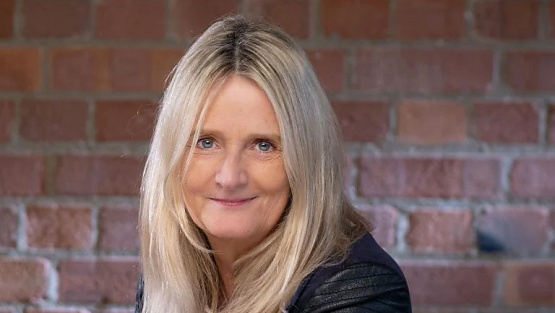
Nicky Cox MBE is the co-founder and editor-in-chief of First News, the UK’s leading children’s news provider. With almost two decades at the helm, she is passionate about making news accessible and engaging for young people.

First News
First News is the UK’s only children’s newspaper. Established in 2006, the paper reaches millions of young people every week, both at home and in schools. Available in print and digital, its aim is to inform and educate children about what’s happening in the world.