Is private school still worth the money?

Private schools are synonymous with small classes, long school days, space for extra-curricular options and the time to take part in them. But should paying for private education still be seen as the best way to set a child up for success?
Finding state sector equivalents to what private schools offer is hard, if not impossible. Many state schools achieve excellent results, but matching the scale of staffing and provision available in much of the independent sector can be difficult. If something comparable exists, it is often heavily oversubscribed, bound by complex admissions criteria and located in an expensive catchment area. A fee-paying school specialising in sport, the arts, academics – or all three – remains attractive to families who can afford it. Yet, with the huge fee hike of recent years, more parents are questioning whether shelling out for this kind of education is justified – or if it could even count against their child in an era of widening participation.
Do private school pupils get better results?
Fee-paying parents want private schools to broaden horizons, provide opportunities and help their child progress – academically, in sport or the arts.
On exam results alone, many schools in the private sector perform strongly. An academically selective one should be expected to help pupils secure impressive exam results and guide them towards a top university. In 2025, 48.4 per cent of A level entries taken at independent schools were awarded an A or A* grade. At state-funded schools, 25.2 per cent achieved those top grades.
Given this strength in A level results, it is unsurprising that independent school pupils have a tendency to end up at the more prestigious universities. However, a drive for inclusivity and widening participation has altered higher education admissions processes.
Ten years ago, 41 per cent of undergraduates starting at Oxford and Cambridge came from private schools. In 2025, that figure had fallen to 31 per cent. Similar reductions can be seen at some – though not all – of the Russell Group (RG) of leading universities.
Around 17 per cent of UK school leavers are privately educated, yet the proportion of privately educated undergraduates at half of the RG universities exceeds that figure. The overall proportion across the group has, as with Oxbridge, fallen in recent years, but it remains well above the 17 per cent baseline and suggests an ongoing advantage for applicants from independent schools.
Earnings data also point to tangible benefits. Department for Education figures published in 2025 show that five years after graduation, UK-based privately educated graduates earn around 15 per cent more, on average, than their state-educated peers.
17 % Of school leavers are privately educated
Correlation or causation?
The elephant in this data-wallpapered room, of course, is one of correlation versus causation. Numerous studies suggest that academic achievement is not down to the type of school a person attends but rather the socio-economic factors of their upbringing. In other words, place two children with identical backgrounds and family situations in two schools, one state, one private, and the academic outcomes for the children by the end of year 13 will be the same. Independent schools may appear to do better in averages and overall figures because their pupil population contains a higher concentration of children with parents who have qualifications and professional careers – people who understand the education system, who have money to spend on books, cultural activities and, if necessary, private tuition.
Is there value in a private education for a short period?
Deciding whether private school is worth the money is not just a question of comparing facilities, GCSEs, A levels and university destinations. It is also a question of sustainability.
Before committing to any length of time in independent education, families should think not only about whether they can afford the fees now, but whether they could continue to do so if circumstances changed. A type of education school that feels out of reach for 14 years, may take on greater air of affordability if you look only at senior school or the two years of sixth form. The Good Schools Guide’s reviews of independent schools now include a school fees calculator to help parents work out the overall costs.
‘The earlier families start thinking about school fees, the more options they tend to have,’ says Cheryl Warner, independent financial planner at Amber River SFIA. ‘Many parents understandably focus on the immediate affordability of a school place, but planning ahead can give families greater flexibility later on – whether that means adapting to fee rises, changing circumstances or considering different routes through independent education such as junior or senior school only, or the option of sixth form entry.’
Is state school a better option for your child?
So, do the benefits of private education warrant a reappraisal? Unfortunately, we don’t get to run the aforementioned double-blind study to see how our child would fare in different educational settings. The answer possibly lies beyond what can be deduced from results data.
When it comes to exam results, some state schools – particularly grammars – can go toe-to-toe with the best-performing private schools. But grammar schools are few and far between, and academic selection at this stage (11+) is not the norm in the state sector. Sieving out high-flyers is more likely to happen later on. Highly selective state sixth forms offer another route to top results and an elite university.
When it comes to exam results, some state schools – particularly grammars – can go toe-to-toe with the best-performing private schools.
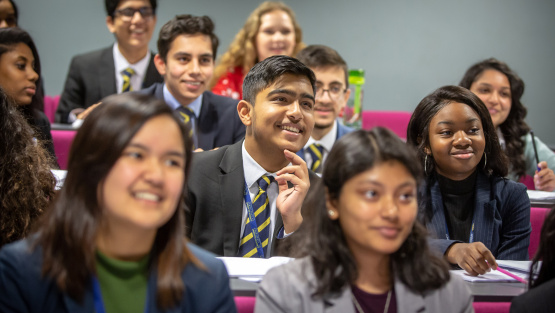
Schools such as Pate’s Grammar School, Exeter Mathematics School and the London Academy of Excellence offer year 12 places to students with high GCSE grades and now annually record tremendous Oxbridge and RG success stories. These schools are hubs of academic excellence – in 2025, 69 per cent of A level grades at the London Academy of Excellence were A* or A – destined to lift the performance of any motivated student.
However, such schools are thin on the ground and highly competitive. While many children do move school for sixth form, places are limited, with some, particularly in London, reserved for children who receive free school meals. Also, these schools achieve impressive university offers not only thanks to their A level results but because some of their pupils receive contextual offers – a process whereby universities offer lower grade requirements to applicants from certain backgrounds. A child coming from a family that could afford private school fees would be unlikely to fit the bill.
What can state schools not do?
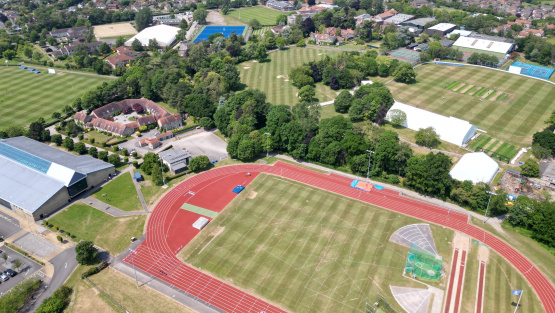
While all state schools are judged on a raft of academic performance measures, many private schools offer something away from academics which sets them apart. A few years back, The Telegraph reported how private school alumni increasingly dominate professional sport. The Good Schools Guide’s study in 2024 showed the disproportionate presence of privately educated athletes competing for Team GB at the Paris Olympics; Millfield, a private school in Somerset, saw nine of its former pupils compete at the Games. The arts likewise are afforded plenty of time and resources. Frensham Heights, in Surrey, timetables six hours of creative and performing arts for all pupils in years 7 to 9; The King Alfred School, in north London, has two drama studios, a theatre, recording studios and annual music festival.
Of course, there are state schools which cater for talent outside academic subjects. For example, Twyford Church of England High School in London reserves places for musicians and offers twenty different music ensembles; The Hertfordshire & Essex High School and Science College selects a portion of its intake on sporting ability and is home to six courts, an all-weather pitch, multi-purpose sports hall and gym. But limited resources mean state schools will struggle to match the breadth of provision found in private schools. Every secondary school place costs the state around £8,500 a year. Average fees, excluding VAT, for a private senior day school come in at £18,500. Extra money makes all the difference when employing staff (the pupil-teacher ratio in private schools is 10:1; in state schools it's 17:1), building theatres and studios, and maintaining sports facilities.
What else do school fees buy?
Control. Unless parents’ ambitions for their child go well beyond his or her ability (in which case selective school assessments such as the 11-plus will provide a timely wake-up call), being able to afford school fees means you get to exercise some control over the kind of education they receive. ‘Going private’ removes the postcode lottery and you can choose a school with a curriculum, ethos and academic pace which suits your child. The importance of this autonomy will be felt more strongly when proposed changes to the admissions code will make it harder for middle-class parents to get their children into the best-performing state schools.
Otherwise, can the success – and therefore appeal – of an independent school be solely attributed to the money that goes into it? Yes and no. School fees pay for a lot but there are other positives which don’t come directly as a result of a financial transaction.
At a private school, parents have literally invested in their children’s education. This results in a culture of high expectations, shared ambition, and a general feeling that everyone is pulling in the same direction. Independent schools use their independence to go beyond the national curriculum. Subjects can be studied for their own merits even though they may not contribute to the English Baccalaureate or a government-decreed push for future national productivity. The broader curriculum and longer school days give time and space for critical thinking, cultural enrichment and sustained participation in co-curricular activities.
There tends to be a consensus between school and parents on matters such as targets, behaviour and discipline – all of which are common in state schools of course but long-established strengths of the private sector where passing trends and political meddling are less likely to influence how a school goes about its business.
Fees alone do not create culture – but the act of financial commitment can reinforce parental engagement and collective ambition.
So, is private school worth it?
If you’re fortunate to have the choice between a state or private education, only you will know what’s the best fit for your child. Both have pros and cons, some apparent from the outset, others which may take years to be revealed. We believe that a school should be judged by the journey it offers pupils – not simply the destination university or career path. For the foreseeable future, that journey is more likely to encompass a broad range of opportunities and resources at a private school. But if a child is dedicated to their studies, passionate about their subject and well taught, the destination can be Russell Group, Oxbridge and professional success, regardless of the type of school they attended.